Hernia
Can a hernia be treated without an operation (hernia treatment without surgery)? What watching it and a belt can do, and when repair is advised
 Reviewed by
Dr Daniel Lee,
MMed Surgery (Singapore), FRCS (Edinburgh), FAMS

You've found a lump that comes and goes, and you'd rather not have an operation. Here's what each option without surgery can and cannot do, and when a planned repair is advised.
The short answer on treating a hernia without an operation (hernia treatment without surgery) is that, as Dr Daniel puts it, a hernia doesn't repair itself. Watching it (watchful waiting) can be a reasonable choice for some men whose groin hernia (inguinal hernia) causes few or no symptoms, and a support belt (hernia belt or truss) gives some people short-term relief. But when the long-term trials of watching were pooled in 2024, about 71% of the men in the watching groups had the repair within 10 years, most often because the pain grew.
This article is about hernias in adults. It does not cover hernias in children, or a hiatus hernia (hiatal hernia), which is a different condition. If you're weighing up the operation itself, you can read how a planned hernia repair is done.
Key takeaways
- A hernia doesn't repair itself. In Dr Daniel's words, it will slowly get bigger, and the gut (bowel) can get trapped in the gap.
- The international guideline says a man whose groin hernia causes few or no symptoms may be watched (watchful waiting), because his risk of a hernia emergency is low.
- Most men who watch have the repair in the end. Pooling the long-term trials, about 29% did within 1 year, 52% within 5 years and 71% within 10 years, most often because the pain grew.
- A support belt (hernia belt or truss) gives some people short-term relief, but the evidence on belts is of very low quality, and there is no evidence that a belt prevents a hernia emergency.
- For a groin hernia in a woman, the guideline argues strongly against watching and recommends a timely repair.
- If your hernia suddenly becomes very painful and firm, or will not push back in, do not wait. Go straight to the nearest A&E.
Can a hernia close up on its own, without an operation (hernia treatment without surgery)?
A hernia happens when part of the gut (bowel) pushes through a weak spot in the muscle wall. Dr Daniel describes it as a lump in the groin or belly button that comes and goes. It barely hurts, he says, which is why most people wait for months, even years.
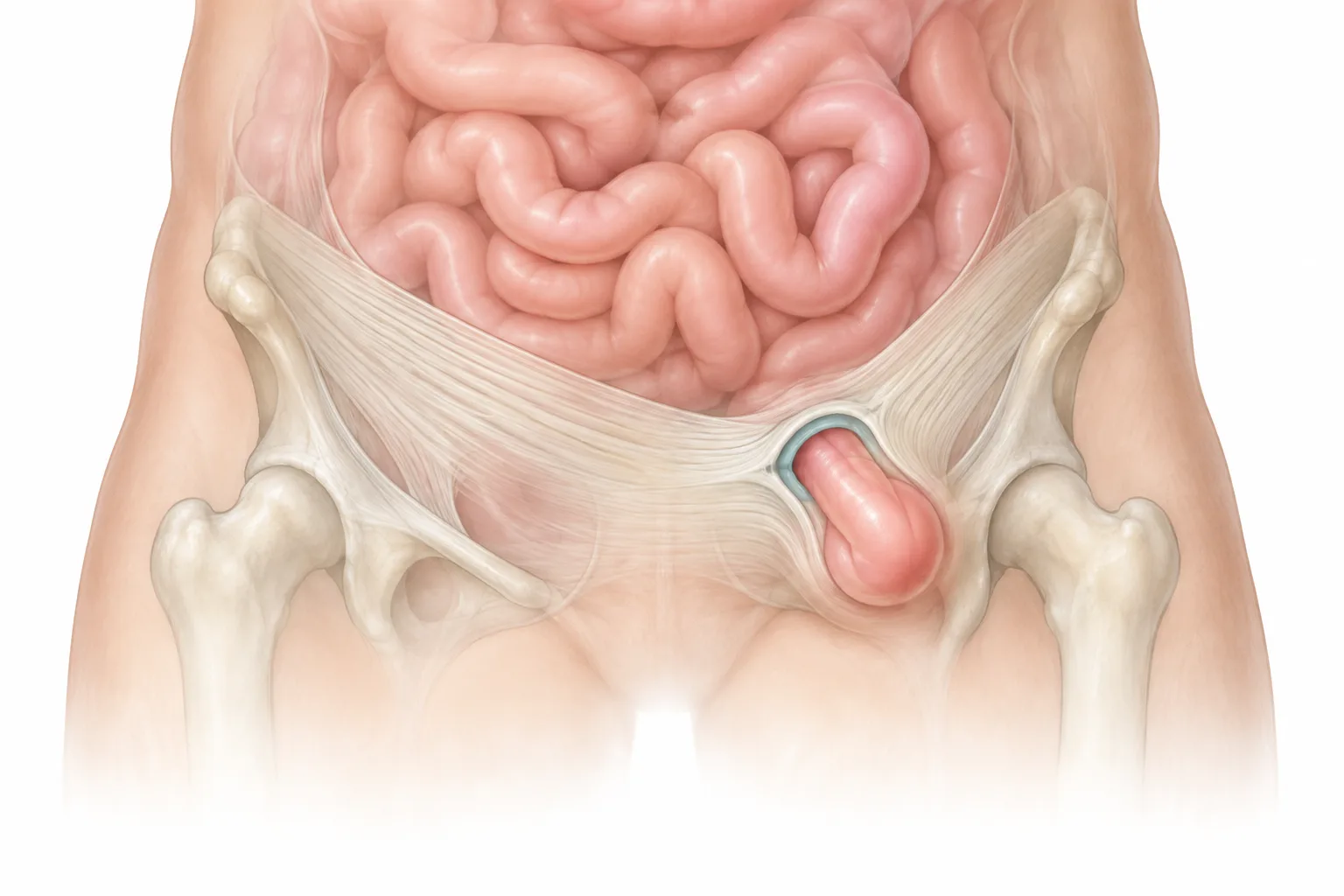
Can it close up by itself? Dr Daniel's answer, for hernias in general, is no. In his words: "The issue is hernia doesn't repair itself. It will slowly get bigger and the bowel can get trapped in the gap and that can mean an emergency operation."
So treating a hernia without an operation doesn't mean making it go away. It means living with it for a time, knowing what to watch for, and deciding with your surgeon when, or whether, to repair it.
What the options without an operation are, and what each can and cannot do
The hernia guidelines discuss two ways to manage a hernia without an operation: watching it (watchful waiting), and, for some people, a support belt (hernia belt or truss). A planned repair is the third option, and the one most men who watch end up choosing. Here they are side by side.
| Option | What the sources say it can do | What it cannot do |
|---|---|---|
| Watching (watchful waiting) | May be offered to a man whose groin hernia (inguinal hernia) causes few or no symptoms, because his risk of a hernia emergency is low | It doesn't close the hernia. In the long-term trials, about 71% of the men watching had the repair within 10 years |
| Support belt (hernia belt or truss) | Can hold the hernia in place during normal activities, and some people get short-term relief | There is no evidence that it prevents a hernia emergency, and the evidence on belts is of very low quality |
| Planned repair (elective hernia repair) | The guideline's treatment for a groin hernia that causes symptoms, and its advice, in good time, for a groin hernia in a woman | It is an operation, with a recovery period; your surgeon explains what it involves for you |
What watching a hernia (watchful waiting) means, and who the trials actually studied
Watching a hernia (watchful waiting) means leaving it unrepaired for now and keeping an eye on it. The international guidelines on hernias in the groin, published by the HerniaSurge Group in 2018, say that a man whose groin hernia (inguinal hernia) causes few or no symptoms may be watched, because his risk of a hernia emergency is low. They add that most of these men will eventually need an operation, so the risks of surgery and of watching should be talked through.
That's a large group. The same guideline says about a third of people with a groin hernia have no symptoms from it.
The trials behind this advice are narrower than the advice can sound. A 2024 review of the trials that assigned people by chance (randomised trials) found three that compared an operation with watching a groin hernia. All three took only men, with an average age above 55. Where they included men with few symptoms, they defined that differently, none described what the care without an operation involved, and all three carry a high risk of bias.
Two gaps follow. The guideline says the evidence cannot yet show whether watching is safe for a man whose groin hernia does cause symptoms. It also says doctors cannot yet predict which watched hernias will start to cause symptoms or a complication.
For a groin hernia in a woman, the guideline goes the other way. It argues strongly against watching and recommends a timely repair, because a hernia in the upper thigh (femoral hernia) is more common in women and more likely to get stuck.
Most of the trial evidence is about groin hernias in men. For a belly button bulge (umbilical hernia), the papers we read give no figures on watching, so this article gives none; our page on belly button hernias sets out how one is assessed and repaired.
How often people who watch a hernia have the repair anyway (hernia treatment without surgery)
Three trials have followed men assigned to watching (watchful waiting) for years. For most of them, watching delayed the repair rather than replacing it.
In 2024, researchers pooled the long-term results of three trials, 592 men in all. About 29% had the repair within 1 year, about 52% within 5 years and about 71% within 10 years. Of the 344 men who had it, the most common reason was that the pain grew, for 58% of them. The authors concluded that watching is a safe choice for these men, but that symptoms are likely to get worse, so an operation will likely be needed in the end.
| Men in the watching groups | Men followed | Had the repair |
|---|---|---|
| Within 1 year | 592 men, three trials | 28.7% |
| Within 5 years | The same 592 men | 51.5% |
| Within 10 years | The same 592 men | 70.6% |
| Men over 65 against younger men (largest trial, 2013 report) | 254 men | 79% against 62% |
Our groin hernia page also sets out what a 2021 review found for men who watched.
Why age changes the picture for men over 65
Age made a clear difference in the largest trial. Its 2013 long-term report found that men over 65 had the repair more often than younger men, 79% against 62% over the long term, and sooner: a median of 3.7 years after joining, against 8.3 years for men 65 and younger.
That matters for a common question: an older parent with a hernia that barely hurts. Dr Daniel's view is that an older person has weaker muscle, and this lets the hernia get bigger. Older patients also more often have other health conditions, which at times can make the sleep medicine (general anaesthesia) or the operation itself higher risk. Careful planning before the operation is key to a good outcome after it. So at times the better option is to have the hernia fixed while you are still fit and healthy.
How often a watched hernia becomes an emergency (acute hernia), and what the numbers mean
The worry with watching is that the hernia gets stuck, and the trials help put a size on that risk. In the 2024 pooled analysis, 15 of the 592 men in the watching groups, about 2.5 in 100, had the repair because the hernia had become stuck (incarcerated). The median follow-up in the three trials ranged from 3 to 12 years.
For a hernia at a scar in the middle of the belly (incisional hernia) that still pushes back in, the European Hernia Society's 2023 guideline on these hernias puts the risk of a hernia emergency at 1 in 100 in the first year and 2.5 in 100 by 5 years. Our incisional hernia page covers how they are assessed and repaired.
Low is not zero, and the guideline on hernias in the groin says nobody can yet predict whose hernia will be the one that gets stuck. Dr Daniel's point, for hernias in general, is that the gut (bowel) can get trapped in the gap. That's why people who watch are told which signs mean they should act.
There's a reassuring side too. When many planned operations were put off during the COVID-19 pandemic, the European Hernia Society's guidance for that period said that people waiting for a planned repair should be reassured that, in most cases, the delay would not raise their risk of a complication. That was guidance for a time when operations were being postponed, not a reason to put off an examination.
Planning also changes what the repair looks like. A planned repair is often done as day surgery, while the same hernia repaired as an emergency usually needs a hospital stay, and the bill is higher.
What a support belt (hernia belt or truss) can and cannot do for a hernia
A support belt (hernia belt or truss) is worn over the hernia. A 2026 patient guide in a surgical journal notes that some people who don't need or want an operation wear one, and that it can hold the hernia in place during normal activities.
The European Hernia Society's guidance on managing hernias during the COVID-19 pandemic, published in 2020, sets out the evidence on belts. It says some guidelines discourage them, and that they were not part of watching (watchful waiting) in the HerniaSurge guidelines. The evidence on how well they work is old, conflicting and sparse, and its quality is very low. Belts are not encouraged, but some people do get short-term relief, and trying one is not unreasonable.
The same goes for a hernia at a scar or in the front of the belly: trying a belt is not unreasonable, and carrying on is reasonable if it eases your symptoms. What the guidance does not support is relying on a belt for safety. It says there is no evidence that a belt can prevent a hernia emergency.
So if you're thinking about a belt, it helps to know that:
- it may make an uncomfortable hernia easier to live with for a while
- it holds the hernia in place rather than repairing it, and a hernia doesn't repair itself
- the warning signs further down still apply while you wear one
- your surgeon can tell you whether one suits your hernia
When a planned repair (elective hernia repair) is advised, and why the decision stays yours
The guideline's starting point is plain: a groin hernia (inguinal hernia) that causes symptoms should be treated with an operation. In the guideline, watching (watchful waiting) is for men whose groin hernia causes few or no symptoms, so a hernia that starts to hurt, or to get in the way of daily life, is the usual moment to talk about a planned repair again. In the long-term trials, pain that grew was the most common reason men stopped watching.
Some hernias are repaired sooner. A hernia in the upper thigh (femoral hernia) is more likely to get stuck, and our femoral hernia article explains why it is checked and repaired sooner. For a scar hernia, the European guideline suggests repair when symptoms affect your quality of life and you are fit for surgery, after a detailed talk about the risks and benefits of an operation and of watching.
For a groin hernia, the guideline is clear that the decision is shared. Your health, your way of life and your circumstances should all shape it, and you should be told how the hernia is expected to behave, about timing, and about the risks of an emergency operation. Dr Daniel's view, for hernias in general, is that hernia surgery rarely needs to be rushed.
What to ask your surgeon before you decide to wait on a hernia

If you'd rather wait, these questions help you leave the consultation with a plan, not just a lump to worry about:
- Which type of hernia is it, and is watching a reasonable choice for that type?
- Do my symptoms count as "few", or would the guideline already advise a repair?
- Which changes mean I should call the clinic, and which mean A&E?
- How often should the hernia be checked while I wait?
- Would a support belt help my discomfort, and does it suit this hernia?
- If I choose a repair later, what would it involve, and could it be day surgery?
If a repair is on the table, you can also read what hernia mesh is made of and where it sits.
What a trapped hernia (strangulated hernia) is, and the signs that cannot wait
Rarely, a hernia can become trapped and lose its blood supply (strangulation). That's the emergency that watching tries to avoid. The 2023 update of the international HerniaSurge guidelines recommends an operation within hours when a strangulated hernia is likely.
The update also separates two situations that can sound alike. A hernia that suddenly won't go back in, when it used to, and comes with new symptoms (an acutely irreducible hernia) is different from one that hasn't gone back in for a long time, without new symptoms (a chronically irreducible hernia). If yours has just stopped going back in, use the first box below.
These two boxes are here so you know when to act, not to alarm you.
Common questions about treating a hernia without an operation (hernia treatment without surgery)
Can a hernia be fixed without surgery?
Not in the sense of closing it. Dr Daniel's plain way of putting it, for hernias in general, is that a hernia doesn't repair itself and will slowly get bigger. Watching it (watchful waiting), sometimes with a support belt (hernia belt or truss), is a way to live with a hernia for a time, and the international guideline says watching can suit a man whose groin hernia causes few or no symptoms.
Can an inguinal hernia be treated without surgery?
A groin hernia (inguinal hernia) that causes few or no symptoms in a man may be watched, the international guideline says, because the risk of a hernia emergency is low. Most men who watch have the repair in the end: about 71% within 10 years across the long-term trials. A groin hernia that causes symptoms should be treated with an operation.
Does a hernia belt help?
It can hold the hernia in place during normal activities, and some people get short-term relief. The European Hernia Society says trying one is not unreasonable, but the evidence on belts is of very low quality, and there is no evidence that a belt prevents a hernia emergency.
What is a strangulated hernia?
A hernia that has become trapped and lost its blood supply. The 2023 update of the international guidelines recommends an operation within hours when one is likely. If your hernia suddenly becomes very painful and firm, or will not push back in, go straight to the nearest A&E.
Is watching a hernia reasonable for an older man?
The trials of watching were mostly in older men: all three took men with an average age above 55. In the largest one (its 2013 report), men over 65 were more likely to end up having the repair, 79% against 62% of younger men, and they had it sooner. Dr Daniel's view is that weaker muscle with age lets a hernia get bigger, and other health conditions can make the anaesthesia or the operation higher risk, so careful planning before the operation matters, and at times the better option is to have the hernia fixed while still fit and healthy.
How much does a hernia assessment or repair cost?
This article doesn't give prices. The fees and MediSave section of our hernia surgery page sets out the assessment fee and the costs of a repair, with MediSave and insurance guidance.
The bottom line on living with a hernia, and your next step
A hernia doesn't repair itself. Watching it (watchful waiting) is a reasonable, guideline-backed choice for some men whose groin hernia (inguinal hernia) causes few or no symptoms, and a support belt (hernia belt or truss) may make it easier to live with for a while. But most men who watch go on to have the repair, most often because it starts to hurt, and that's a choice to make with your surgeon, on your own timing, rather than one an emergency makes for you.
If you have a hernia and you're wondering whether it can wait, the next step is an examination, not a guess. To talk it through with Dr Daniel Lee, a colorectal and hernia surgeon, you can send the clinic a WhatsApp message.
Written by the clinic's editorial team. This article is general information and not a diagnosis. Your surgeon will advise on your own hernia.