Constipation in Singapore, getting to the cause and a clear way forward.
Most constipation is simple and settles with a few changes. But when hard stools, straining, or a change in bowel habit does not settle, it is worth understanding why. Dr Daniel Lee assesses it thoroughly and gives you a clear plan, not a worrying one.
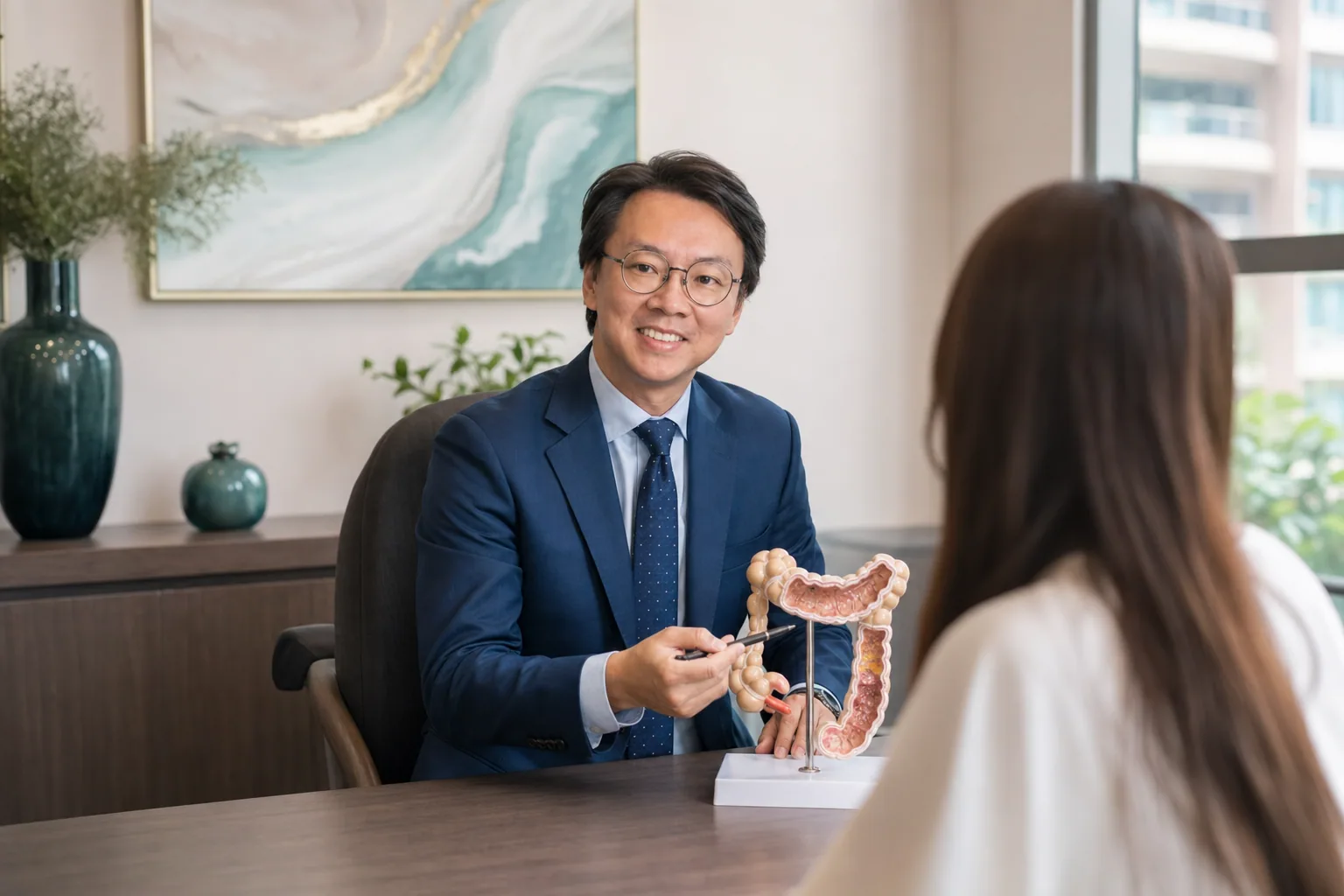
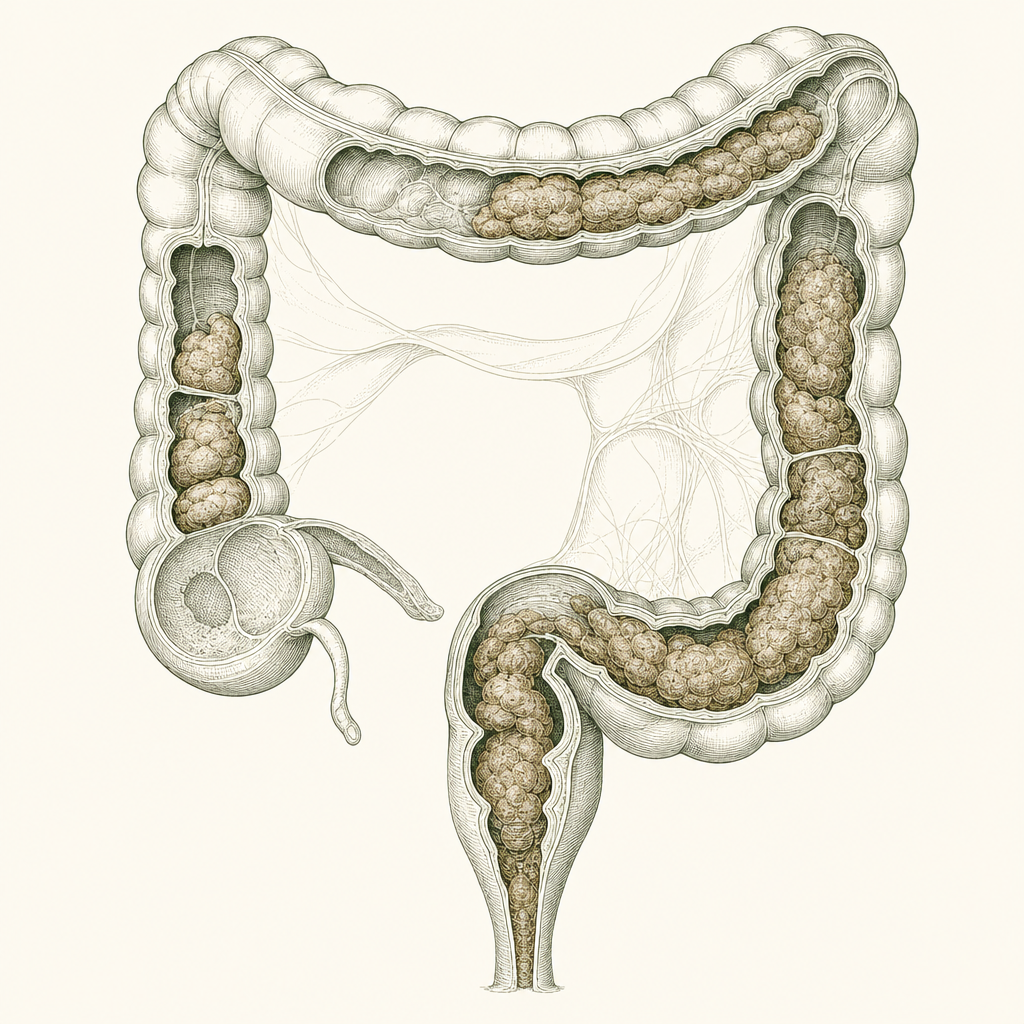
Infrequent or hard-to-pass stools, straining, or a sense of incomplete emptying.
Constipation means different things to different people. For some it is hard stools that are difficult to pass. For others it is going less often than usual, needing to strain, or feeling that the bowel has not fully emptied. It is one of the most common digestive complaints, and in most cases it responds well to changes in diet, fluids, and fibre.
A persistent change in bowel habit deserves attention, especially in someone over 50 or when it comes with bleeding, unexplained weight loss, or a family history of bowel cancer. Dr Lee's assessment starts with a thorough conversation, moves through examination, and uses investigations such as colonoscopy where they are warranted.
Hard or infrequent stools
Stools that are difficult to pass, or going less often than usual, are the most common pattern. Most people improve with more fluids, fibre, and regular movement.
Straining and incomplete emptying
Needing to push hard or feeling the bowel has not fully emptied after going can point to a cause worth identifying properly, rather than relying on laxatives long term.
Chronic constipation
When symptoms persist for weeks or months without a clear reason, a thorough assessment helps identify the cause and the right approach.
Change in bowel habit
A new pattern of constipation, especially alongside other symptoms, warrants assessment to rule out other conditions before settling on treatment.
When to see a colorectal surgeon, and when it should not wait.
Constipation that does not improve with a week or two of dietary changes, or that comes with other symptoms, is worth getting checked. Early assessment gives you a clear picture and avoids missing something that needs attention.
- Constipation that does not improve with increased fluids, fibre, or over-the-counter measures
- Blood in the stool or on the toilet paper
- Unexplained weight loss alongside a change in bowel habit
- Alternating constipation and loose stools, or a persistent change in your usual pattern
- A family history of bowel cancer or polyps, especially if you are over 50
Some symptoms need to be seen the same day.
Severe abdominal pain with vomiting and no passage of stool or wind can signal a bowel obstruction. This is different from ordinary constipation and needs to be assessed in a hospital emergency department without delay. If that combination of symptoms happens, do not wait for a routine appointment.
Understanding the cause before deciding on treatment.
Constipation has many possible causes, from diet and fluid intake to medication side effects, pelvic floor changes, or, less commonly, a structural change in the bowel. Dr Lee starts with a thorough history of your bowel habit, diet, activity level, and any medications you take. A physical examination follows.
Where there is a reason to look further, investigations are arranged. Colonoscopy is the most useful when there is a concern about a structural cause, bleeding, or a change in bowel habit that warrants ruling out other conditions. The result is a treatment plan tailored to what is actually causing the problem, starting with the simplest measures first.
- A detailed review of bowel habit, diet, fluids, and any medications that may contribute
- Examination to assess the abdomen and, where appropriate, the lower bowel
- Colonoscopy where there is a reason to look more closely, such as bleeding, weight loss, or a family history
- A personalised treatment plan, starting with diet, fluids, and fibre before moving to other options
A surgeon who built care around older patients.
For an elderly parent, the questions are different. Is a colonoscopy safe at their age? Will the assessment account for all the factors that matter? As the former Surgical Lead for Geriatric Surgery at Khoo Teck Puat Hospital, Dr Lee developed assessment and recovery pathways designed around older patients, and co-authored a 2024 review in the Journal of Gastrointestinal Surgery on how surgeon-led geriatric care drives good outcomes in older patients undergoing abdominal surgery.
For families arranging an assessment for a parent, that depth of experience makes a real difference. More about Dr Lee's background and approach.

A clear path from assessment to improvement.
Most improve with simple measures
For the majority of people, constipation responds well to increasing fluids, dietary fibre, and adjusting daily habits. Dr Lee explains the specific changes that are most likely to help in your situation.
Where treatment is needed
When diet and lifestyle alone are not enough, targeted treatment can help. Options range from medication to specific procedures depending on the cause. Dr Lee discusses what is right for your situation before anything is arranged.
Ongoing review when needed
Some people need a single assessment and a clear plan. Others benefit from a review a few months later. Dr Lee sets out what to do next and when to come back if things are not improving as expected.
Clear fees for constipation assessment, with MediSave and insurance guidance.
Your exact fee is explained clearly at consultation, before any investigation is scheduled.
You can check these figures against the published MOH fee benchmark page.
Where an investigation such as colonoscopy is needed, it is typically a day procedure. Anaesthetist and facility fees are charged separately and vary by hospital.
Use what you are entitled to
Investigations such as colonoscopy, when indicated as part of a constipation assessment, are typically MediSave claimable, subject to the applicable withdrawal limits. The team helps you apply it correctly.
Often covered by your plan
Day-surgery and short-stay procedures are usually covered under Integrated Shield Plans. The team helps you understand what your plan covers before anything is scheduled.
We handle the claim
The team assists with the forms and liaises with your insurer where possible, so the administrative side is as straightforward as the consultation.
The plans we work with.
Dr Daniel Lee practises with Colorectal Clinic Associates (CCA). The clinic works with the insurers below, and the team assists with claims and eligibility checks.






















Constipation in Singapore, answered plainly.
How do I know when constipation needs a doctor?
Do I need a colonoscopy for constipation?
What can I do at home for chronic constipation?
I am arranging this for an elderly parent. Is that different?
Will MediSave or my insurance cover the investigation?
What is the difference between ordinary constipation and something more serious?
Constipation assessments across five private hospitals.
Related conditions Dr Lee treats.
A short message is enough to begin.
Whether constipation is something you have been putting up with for a while or a new change that has caught your attention, send a note with your name, number and what you are noticing. Dr Lee's team will reply on WhatsApp and arrange a time and location that suits you.