Diverticular disease in Singapore, a calm path to settling the pain.
If you have had pain in the lower left of your tummy, a change in bowel habit, or a worrying bout of fever, diverticular disease is a common cause in Singapore. Most episodes settle with the right care. Dr Daniel Lee confirms the diagnosis and decides a clear plan with you.
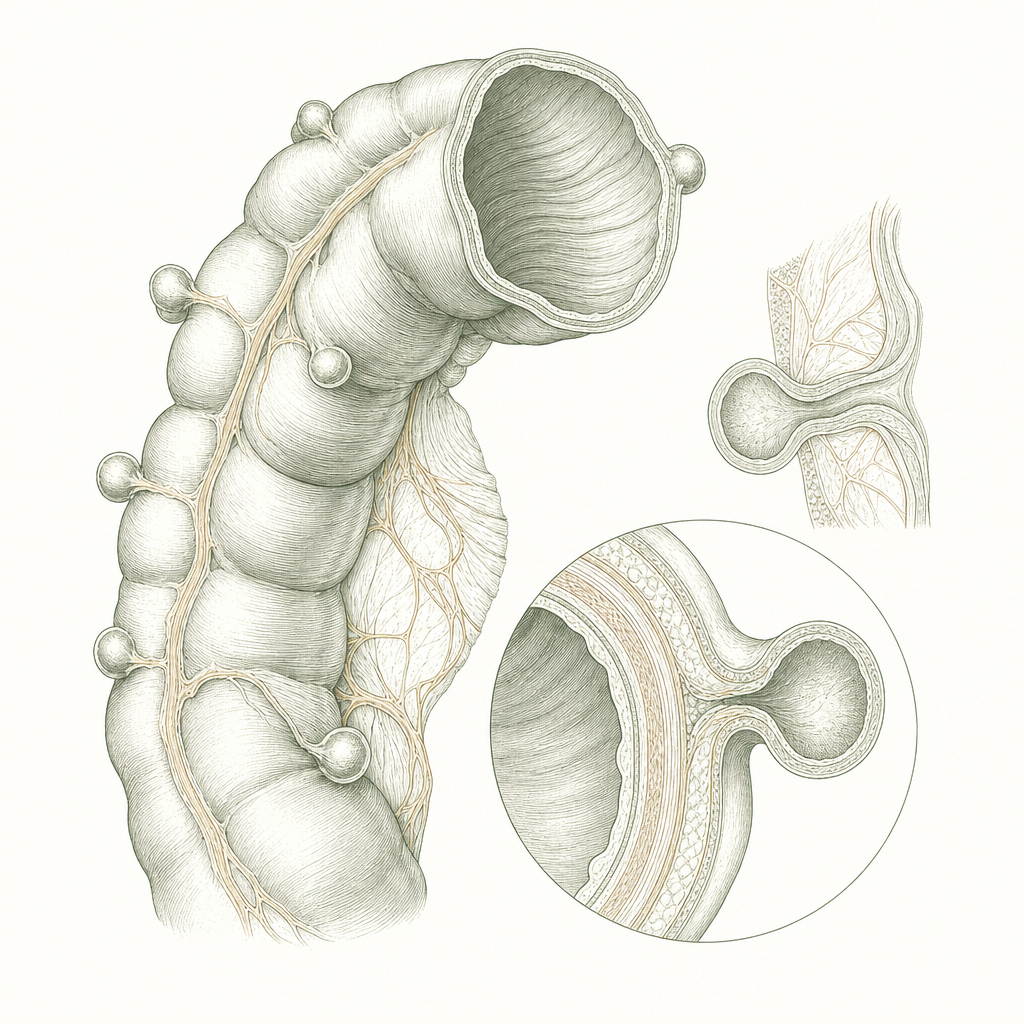
Small pouches in the colon wall that can stay quiet, or become inflamed.
Diverticular disease is when small pouches, called diverticula, form in the wall of the colon. This is a common finding, particularly as people get older. When the pouches are present but cause no trouble, the condition is called diverticulosis. When one or more pouches become inflamed or infected, it is called diverticulitis, and that is when pain, fever, and a change in bowel habit typically occur. Diverticular bleeding is a separate presentation where a blood vessel near a pouch bleeds.
Not everyone with diverticular disease will ever have symptoms. For those who do, most flare-ups can be settled without surgery. A colonoscopy is usually recommended after a flare to confirm the diagnosis and rule out other causes. Understanding your situation clearly is the best starting point for any decision that follows.
Diverticulosis
Pouches in the colon wall with no symptoms. Many people discover this incidentally during a colonoscopy and need no treatment beyond a high-fibre diet and regular fluids.
Diverticulitis
When a pouch becomes inflamed or infected, causing pain usually in the lower left tummy, fever, and a change in bowel habit. Most episodes settle with antibiotics and dietary changes.
Diverticular bleeding
Bleeding from a blood vessel near a diverticulum. It often settles on its own but should always be assessed promptly, particularly if it is heavy or persistent.
Complicated diverticulitis
A smaller number of cases involve an abscess, a perforation, a narrowing of the bowel, or a fistula. These may need more active treatment, sometimes including surgery.
What to look out for, and when it should not wait.
Many people with diverticular disease live with it without ever knowing. When diverticulitis does flare, the signs can feel alarming. Knowing what is typical and what needs urgent attention helps you act at the right time rather than too late.
- Pain in the lower left side of your tummy, which may come and go or stay constant during a flare
- Fever or feeling generally unwell during an episode of diverticulitis
- A change in bowel habit, such as looser stools, constipation, or alternating between the two
- Nausea, bloating, or loss of appetite during a flare-up
- Rectal bleeding, which should always be assessed by a doctor
Some signs of diverticular disease need same-day attention.
Most flare-ups of diverticulitis are painful but not life-threatening. However, severe tummy pain, a high fever with chills, or heavy rectal bleeding can mean a serious complication such as a perforation or an abscess. If any of those happen, go to a hospital emergency department without delay. It is always better to be checked and reassured than to wait and see.
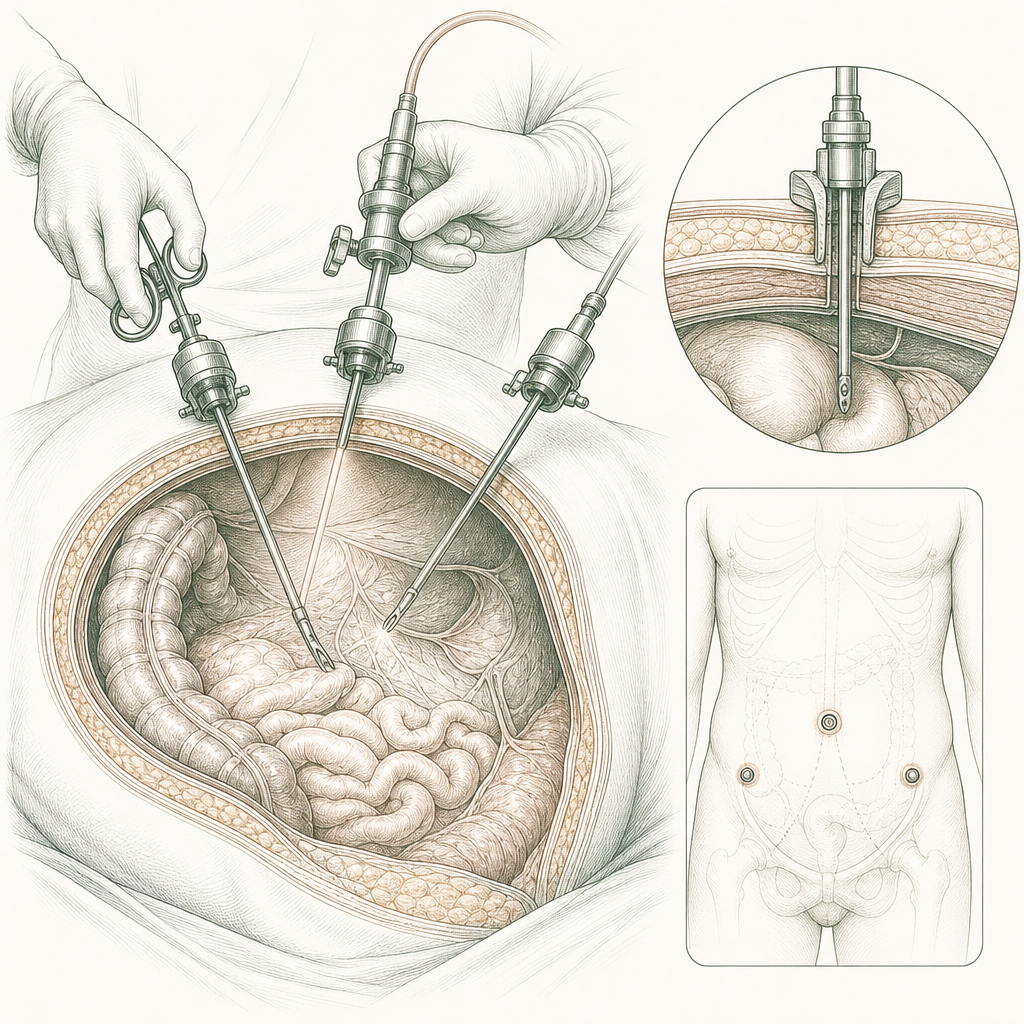
Most flare-ups settle with medical treatment; colonoscopy confirms the diagnosis; surgery is reserved for complications.
Diverticular disease is managed according to how severe the episode is. Many mild flare-ups of diverticulitis settle at home with a liquid or low-fibre diet, rest, and oral antibiotics. More severe episodes may need a short hospital stay for closer observation, intravenous fluids, and stronger treatment. Between flare-ups, a high-fibre diet and adequate fluids help keep the bowel healthy and reduce the chances of another episode.
A colonoscopy is usually recommended after a flare settles, to confirm the diagnosis and rule out other causes such as colorectal cancer. Surgery is not needed in most cases, but may be discussed if there have been repeated severe attacks, a complication such as an abscess or perforation, a narrowing of the bowel, or a fistula. Dr Lee will explain clearly what your situation calls for and what the options are.
- Diet, fluids, and rest. A high-fibre diet and good hydration form the foundation of long-term management, with dietary adjustments during an acute flare
- Antibiotics when needed. Most episodes of acute diverticulitis are treated with a course of antibiotics alongside dietary changes
- Colonoscopy to confirm the diagnosis, usually performed after the flare has settled, to confirm diverticular disease and exclude other causes
- Surgery for complications, reserved for serious or repeated episodes, discussed carefully and only when the benefit clearly outweighs the risk
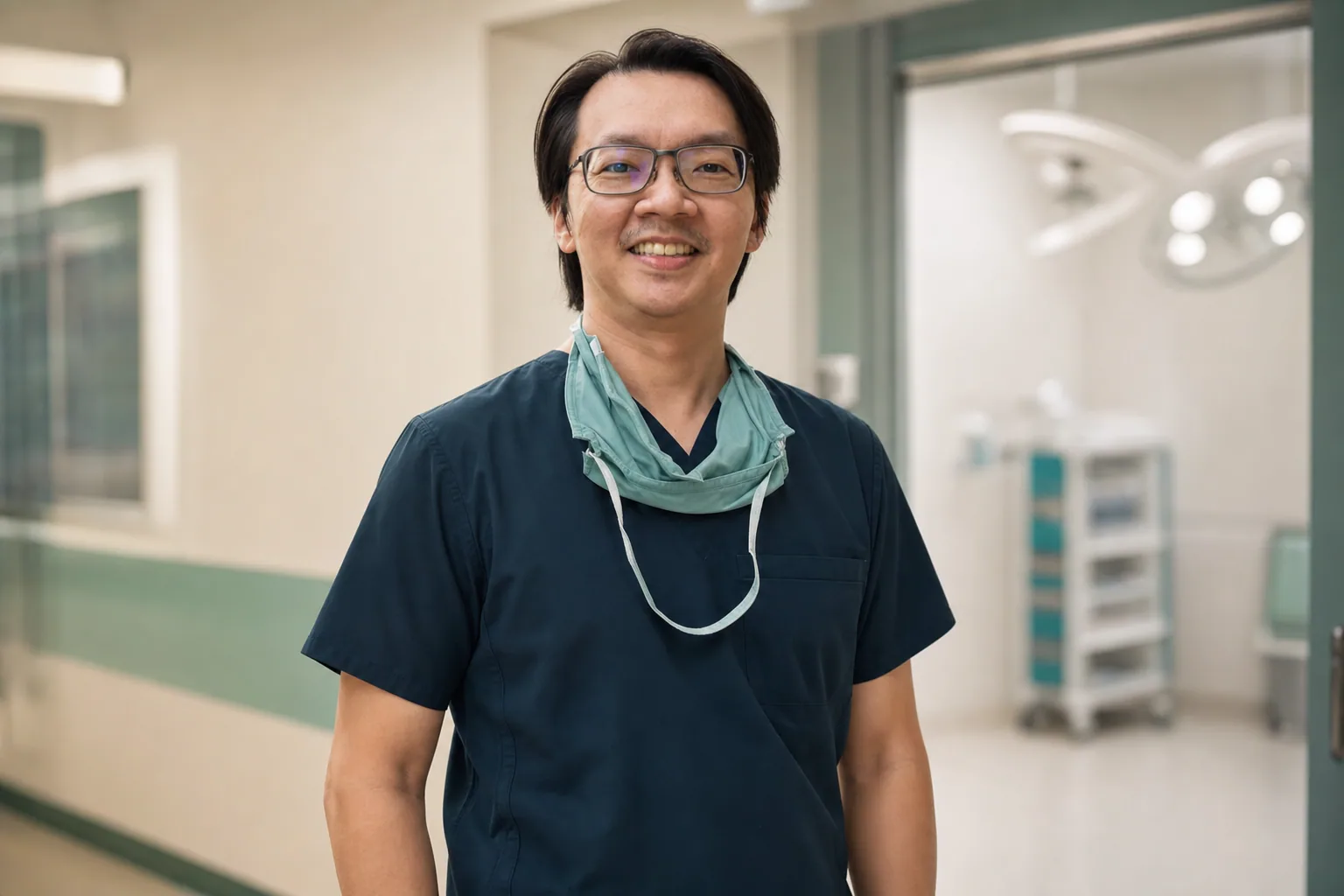
A surgeon who built care around older patients.
For an elderly parent, the questions are different. Is the anaesthetic safe? Will recovery be steady? As the former Surgical Lead for Geriatric Surgery at Khoo Teck Puat Hospital, Dr Lee developed assessment and recovery pathways designed around older patients, and co-authored a 2024 review in the Journal of Gastrointestinal Surgery on how surgeon-led geriatric care drives good outcomes in older patients undergoing abdominal surgery.
For families weighing up an operation for a parent, that experience is the difference between a procedure and a recovery. More about Dr Lee's background and approach.

A steady recovery, with clear next steps.
Recovering from a flare at home
Most mild episodes of diverticulitis resolve within a few days. You will be advised to rest, follow a liquid or low-residue diet initially, and gradually return to eating normally as the pain and fever settle.
After a hospital stay
If you needed admission, the team will make sure you are comfortable and mobile before you go home, with clear instructions on diet, medications, and what to watch for. Most people feel noticeably better within a week.
Long-term diet and follow-up
A high-fibre diet with plenty of vegetables, wholegrains, legumes, and adequate water helps reduce the risk of future flare-ups. Dr Lee will explain what a practical long-term plan looks like for your situation.
Clear costs for diverticular disease care, with MediSave and insurance guidance.
Your exact fee is explained clearly at consultation, before anything is scheduled.
You can check these figures against the published MOH fee benchmark page.
Anaesthetist and facility fees are charged separately and vary by hospital. Where a colonoscopy or surgery is needed, it is typically a day-surgery or short-stay procedure.
Use what you are entitled to
Colonoscopy and surgery for diverticular disease are typically MediSave claimable, subject to the withdrawal limits set for the procedure. We help you apply it correctly.
Often covered by your plan
Day-surgery and short-stay procedures are usually covered under Integrated Shield Plans. We help you understand what your plan covers before anything is scheduled.
We handle the claim
The team assists with the forms and liaises with your insurer where possible, so you can focus on getting the right treatment.
The plans we work with.
Dr Daniel Lee practises with Colorectal Clinic Associates (CCA). The clinic works with the insurers below, and the team assists with claims and eligibility checks.






















Diverticular disease in Singapore, answered plainly.
What is the difference between diverticulosis and diverticulitis?
Do I always need surgery for diverticular disease?
Why does my doctor want me to have a colonoscopy after a flare?
How can I reduce the chance of another flare-up?
Will MediSave or my insurance cover a colonoscopy or surgery?
I am arranging this for an elderly parent. Is that different?
Diverticular disease care across five private hospitals.
Related conditions Dr Lee treats.
A short message is enough to begin.
Whether the concern is for you or a family member, send a note with your name, number and what you are noticing. Dr Lee's team will reply on WhatsApp and arrange a time and location that suits you.