Piles and haemorrhoid treatment in Singapore, without the dread.
If you have noticed blood on the toilet paper, a painful lump, or something that does not feel right down there, you are far from alone. Piles are common, nothing to be embarrassed about, and most are simpler to treat than people fear. Dr Daniel Lee finds what is actually causing it, then matches the gentlest treatment that will work.
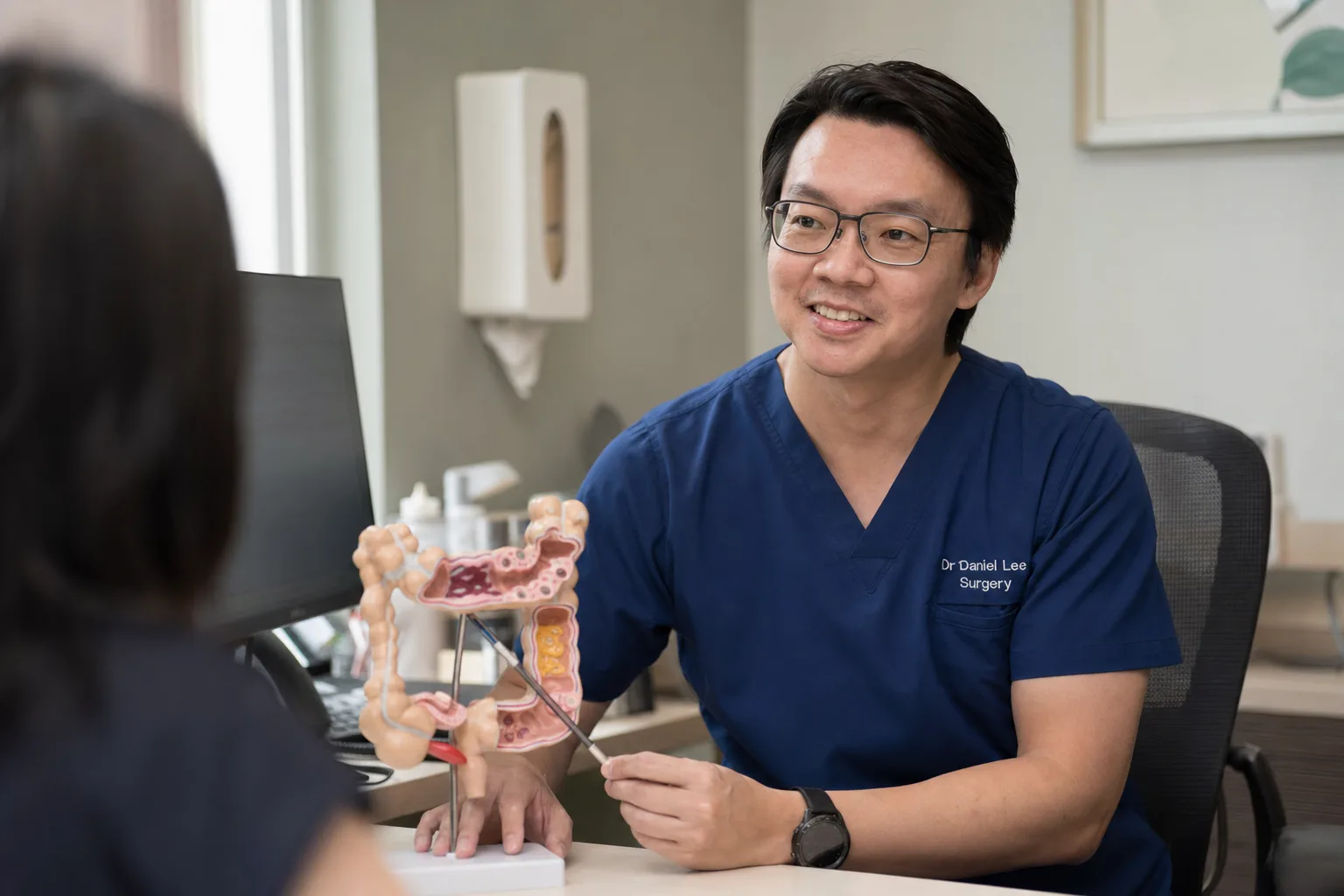
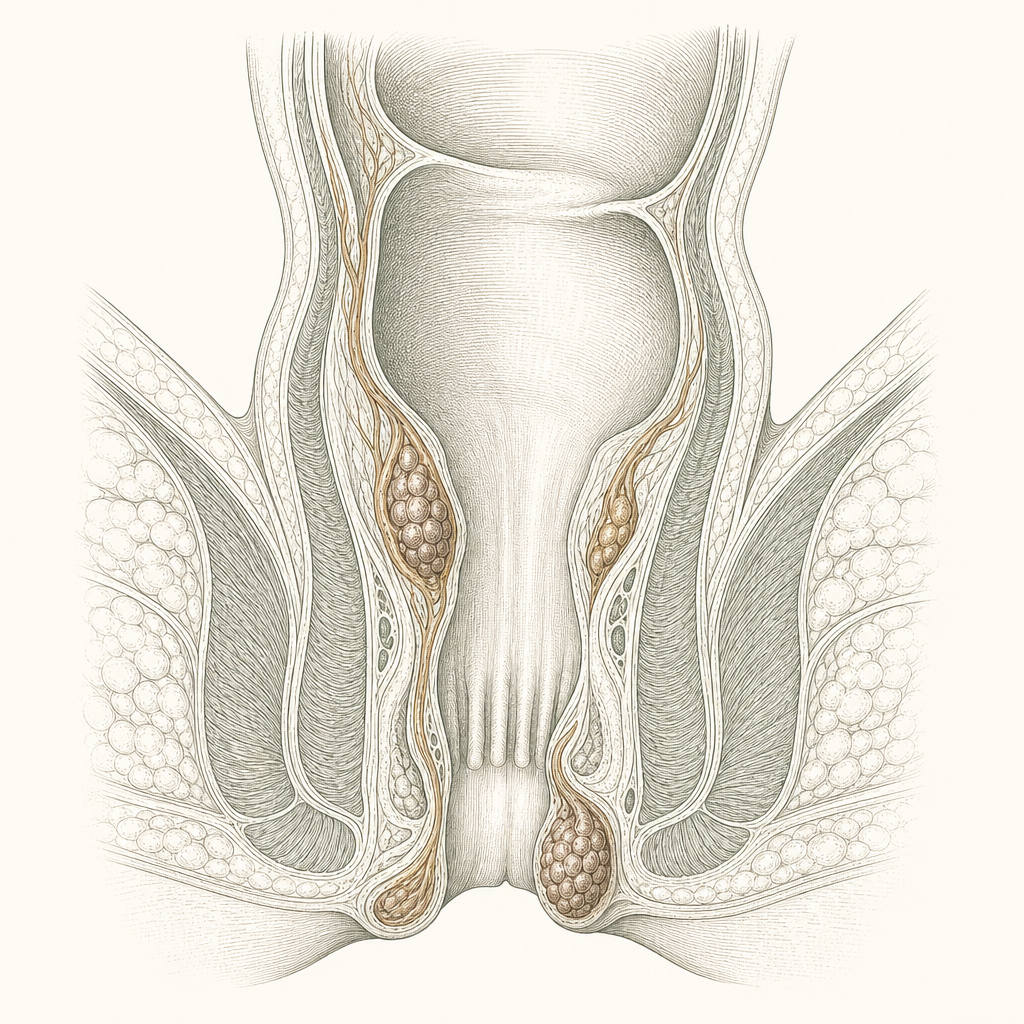
Common, treatable, and nothing to feel ashamed about.
Piles, also called haemorrhoids, are swollen blood vessels around the back passage. They are extremely common, and most people will have them at some point in life. They can sit just inside the back passage, where they often cause painless bleeding, or around the opening, where they are more likely to feel sore or itchy. Knowing which type you have, and how far along it is, is what decides the right treatment.
Most piles do not need surgery. Many settle with simple changes and an in-clinic procedure, and even the ones that do need day surgery are far more manageable than the reputation suggests. The point of seeing a colorectal surgeon is to get a clear answer and the least invasive treatment that will actually solve it, rather than living with it for months in silence.
Grade 1 and 2 piles
Early piles that bleed or feel uncomfortable but stay inside, or slip out and go back on their own. These usually respond to simple measures and a short in-clinic procedure.
Grade 3 and 4 piles
More advanced piles that come out and need to be pushed back, or stay out. These are where a day-surgery option such as laser haemorrhoidoplasty is often the right next step.
Anal fissure
A small tear in the lining of the back passage that causes sharp pain when passing stool, sometimes with a little bright-red blood. Often mistaken for piles, and treated differently.
Other perianal concerns
Skin tags, itching, or an anal fistula. Dr Lee assesses what is really going on so the treatment matches the actual cause, not just the symptom.
When piles are worth checking, and when they should not wait.
Many people put off seeing someone about piles out of embarrassment, or because they assume it will sort itself out. It often does not, and waiting usually makes treatment more involved than it needed to be. A consultation is discreet, unhurried, and most of the time the news is reassuring.
- Blood on the toilet paper, in the bowl, or in your stool
- A painful or itchy lump around the back passage
- Something that feels like it is sticking out, or will not go back
- Discomfort or pain when sitting, or when passing stool
- A feeling that you can never quite empty fully
Bleeding is usually piles, but it should always be checked.
Most bleeding from the back passage comes from something benign such as piles or a small tear, not cancer. But bleeding is also the one symptom that should never simply be assumed to be piles, especially over the age of forty or with any change in bowel habit. The responsible, and usually reassuring, step is to have it looked at properly, which may include a colonoscopy to rule out anything more serious before treating what is actually there.
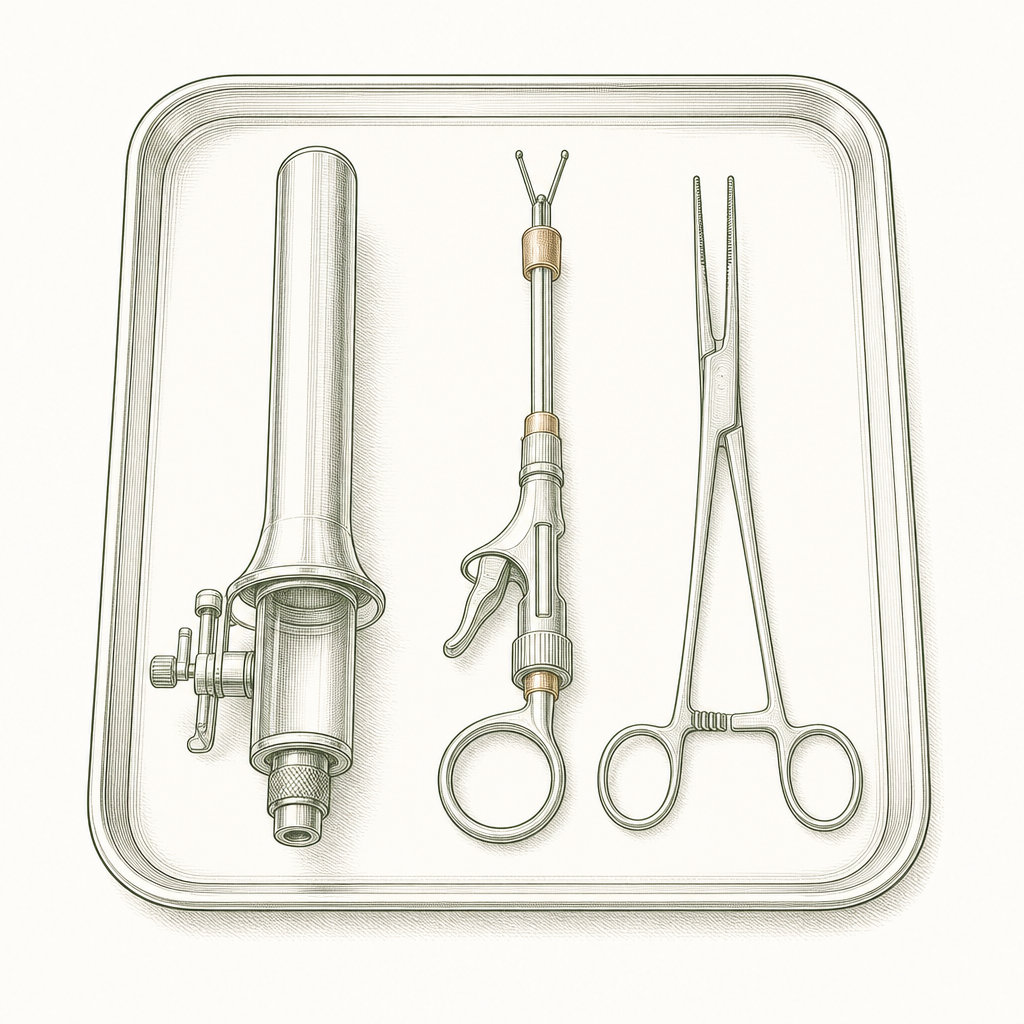
Matched to the cause, from in-clinic to day surgery.
There is no single treatment for piles. The right one depends on the type, the grade, and how much it is affecting you. Dr Lee talks you through the options in plain language, and recommends the least invasive approach that will actually solve the problem.
Older, more painful operations have given piles surgery a fearsome reputation. Today, gentler day-surgery techniques such as laser haemorrhoidoplasty mean many patients are treated and home the same day, with a more comfortable recovery than the traditional approach. Where a more involved operation is genuinely the right choice, that is explained clearly too.
- Simple measures first, such as fibre, fluids and topical treatment for early piles
- Rubber band ligation, a quick in-clinic procedure for suitable cases
- Laser haemorrhoidoplasty, a gentler day-surgery option for more advanced piles
- Conventional surgery where it is genuinely the right choice, explained clearly
A surgeon who makes an awkward conversation easier.
Piles, fissures and other proctology problems are some of the conditions people most dread talking about. Dr Lee sees them every week, and the consultation is private, matter-of-fact, and free of judgement. Honestly, these problems are far more common than people think, and the goal is simply to sort it out so you can get on with life.
If you are weighing this up for yourself or a family member, that calm, experienced approach is the difference between dreading the appointment and being glad you finally went. More about Dr Lee's background and approach.
A surgeon who built care around older patients.
For an older parent, a day-surgery procedure raises different questions. Is the anaesthetic safe? Will recovery be manageable at home? As the former Surgical Lead for Geriatric Surgery at Khoo Teck Puat Hospital, Dr Lee developed assessment and recovery pathways designed around older patients, and co-authored a 2024 review in the Journal of Gastrointestinal Surgery on how surgeon-led geriatric care drives good outcomes in older patients undergoing surgery.
For families weighing up a procedure for a parent, that experience is the difference between a procedure and a recovery. More about Dr Lee's background and approach.
A short recovery, with clear next steps.
Home the same day
In-clinic procedures and most day-surgery options let you go home the same day. The team gives you simple written instructions and a number to reach them with any questions.
Back to routine quickly
With the gentler techniques, most people are back to normal activity within days rather than weeks. Some mild discomfort settles steadily, and you will know what is normal and what is not.
A plan to keep it from returning
Dr Lee covers the simple habits that lower the chance of piles coming back, so the treatment lasts rather than the problem returning a year later.
Clear piles treatment costs, with MediSave and insurance guidance.
Your exact fee is explained clearly at consultation, before anything is scheduled.
You can check these figures against the published MOH fee benchmark page.
Anaesthetist and facility fees, where a day-surgery procedure is needed, are charged separately and vary by hospital. Many in-clinic options are simpler and lower cost.
Use what you are entitled to
Day-surgery procedures for piles are typically MediSave claimable, subject to the withdrawal limits set for the procedure. We help you apply it correctly.
Often covered by your plan
Day-surgery procedures are usually covered under Integrated Shield Plans. We help you understand what your plan covers before anything is scheduled.
We handle the claim
The team assists with the forms and liaises with your insurer where possible, so you can focus on getting it sorted.
The plans we work with.
Dr Daniel Lee practises with Colorectal Clinic Associates (CCA). The clinic works with the insurers below, and the team assists with claims and eligibility checks.






















Piles treatment in Singapore, answered plainly.
Do piles always need surgery?
Does treating piles hurt?
I have blood in my stool. Is it definitely piles?
Is the consultation embarrassing?
Will MediSave or my insurance cover it?
I am arranging this for an elderly parent. Is that different?
Piles treatment across five private hospitals.
Related conditions Dr Lee treats.
A short message is enough to begin.
Whether the consultation is for you or a family member, send a note with your name, number and what you are noticing. Dr Lee's team will reply on WhatsApp and arrange a discreet time and location that suits you.