Colorectal cancer screening in Singapore, caught early, calmly.
Bowel cancer is one of the most common cancers in Singapore, and also one of the most preventable when it is found early. Screening looks for the earliest signs, often before there are any symptoms, so small growths can be removed before they become a problem. Dr Daniel Lee guides you to the right kind of screening for your age and risk.
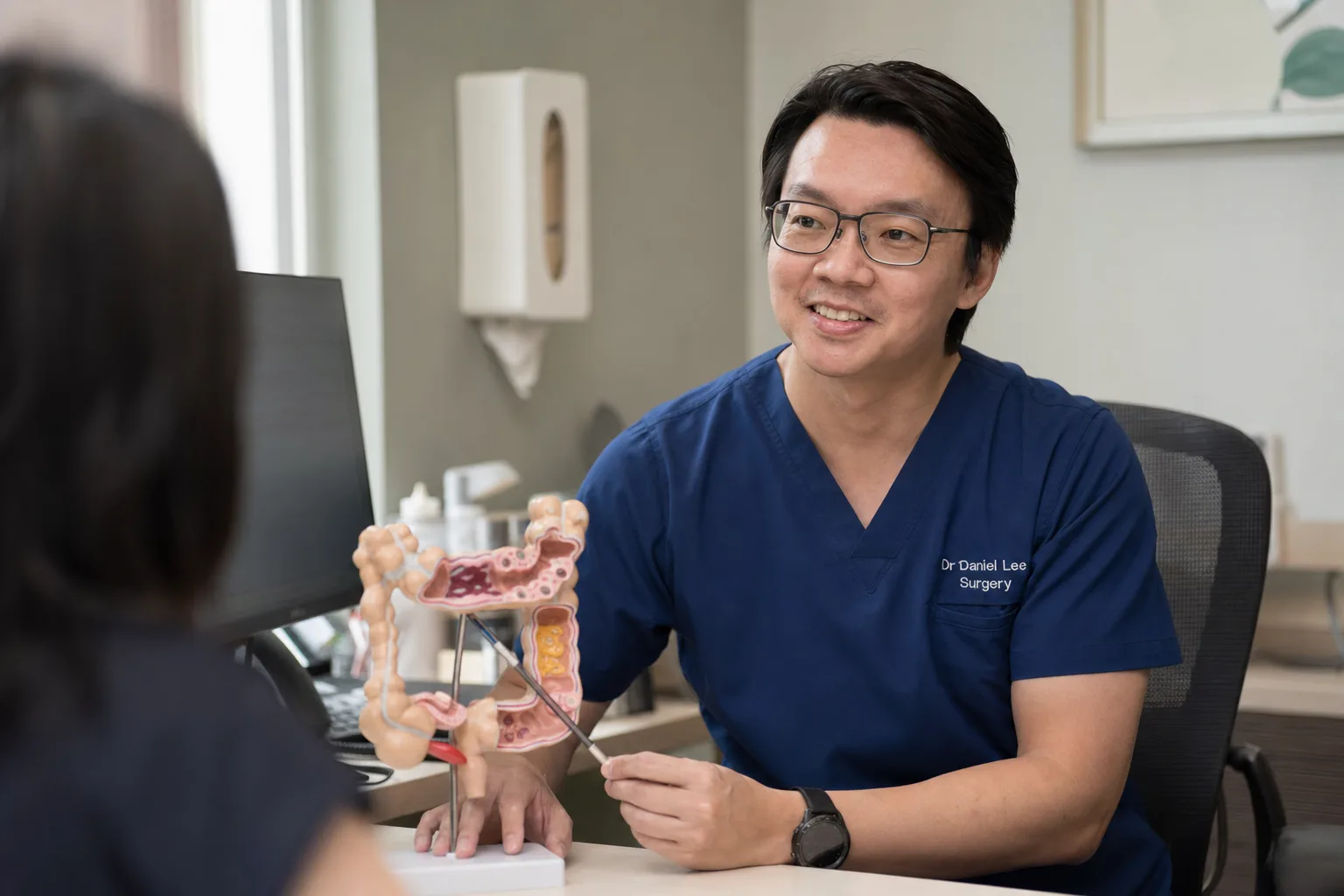
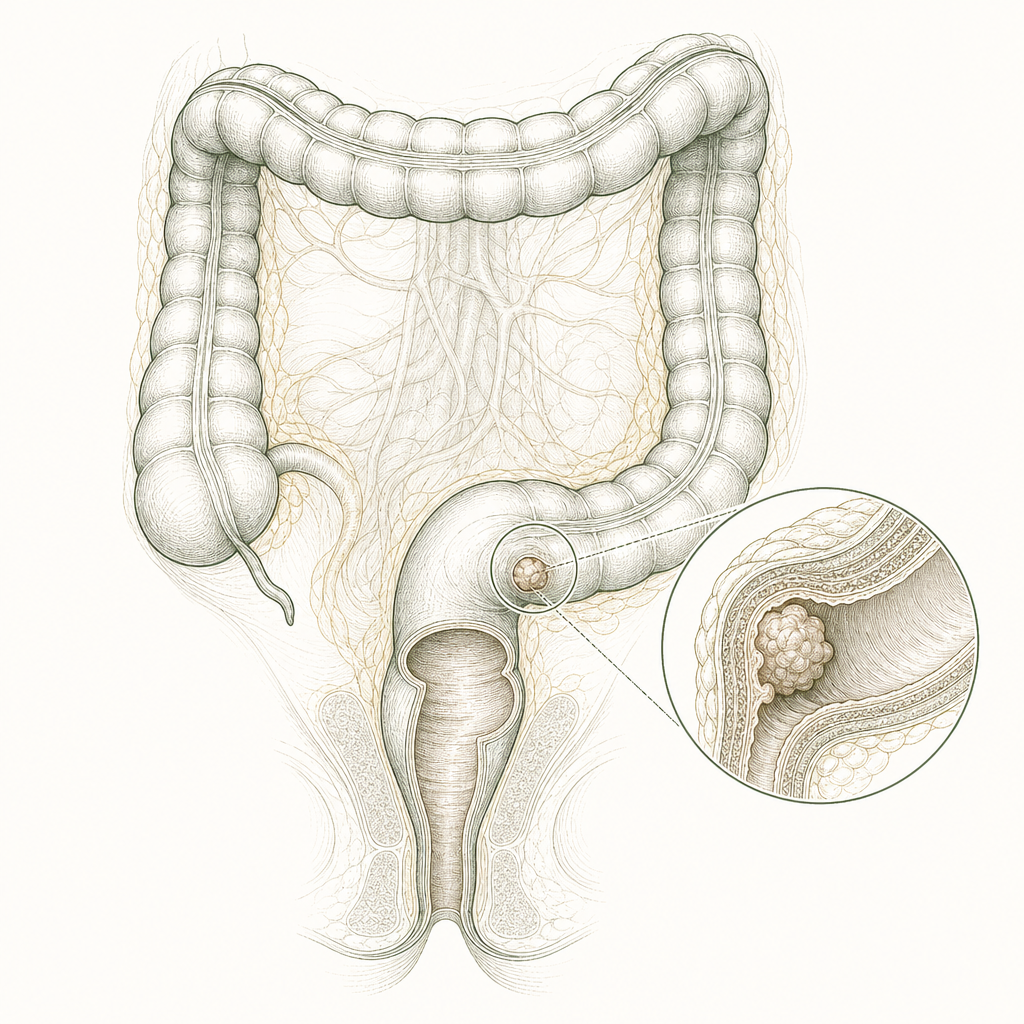
Checking for bowel cancer before it ever has a chance to grow.
Colorectal cancer screening is a way to check the bowel for early signs of cancer, or for the small growths called polyps that can slowly turn into cancer over time. The point of screening is that it happens before you feel anything is wrong. Most early bowel cancer has no symptoms at all, which is exactly why finding it early matters so much.
When a polyp is found during a screening colonoscopy, it can usually be removed there and then, before it ever has the chance to develop. That is what makes screening so powerful, it does not just find bowel cancer early, it can prevent it from happening in the first place.
Stool test (FIT)
A simple, non-invasive stool test that looks for hidden blood. It is an easy first step for people at average risk with no symptoms, and a positive result is followed up with a colonoscopy.
Screening colonoscopy
The most thorough check, a direct look at the full bowel lining under light sedation, with any polyp removed during the same procedure. Recommended from around age 45 to 50, or earlier with a family history.
Polyp removal
If a polyp is found, it is usually removed during the same colonoscopy, which lowers your future risk before anything has time to develop.
Surveillance
A planned follow-up schedule for people who have had polyps or a strong family history, at the interval Dr Lee sets out for your situation.
Who should be screened, and when it should not wait.
Many people put off screening because they feel well, or because they are quietly afraid of what it might find. Both are understandable, and both are reasons to go ahead. Screening is most valuable precisely when you have no symptoms, and most results are reassuring. The ones that are not are far easier to treat when found early.
- You are aged 45 to 50 or older, even with no symptoms
- A parent, sibling or child has had bowel cancer or polyps
- You have noticed blood in your stool or a change in bowel habits
- You have had polyps removed before and are due for a follow-up
- You have a personal history of inflammatory bowel disease
Bleeding does not mean cancer, but it should always be checked.
Most bleeding from the back passage comes from something benign, such as piles or a small tear, not cancer. The point of getting checked is not to confirm your worst fear, it is to rule it out, and to treat whatever is actually causing it. The responsible, and usually reassuring, step is simply to have it looked at rather than wait and worry.
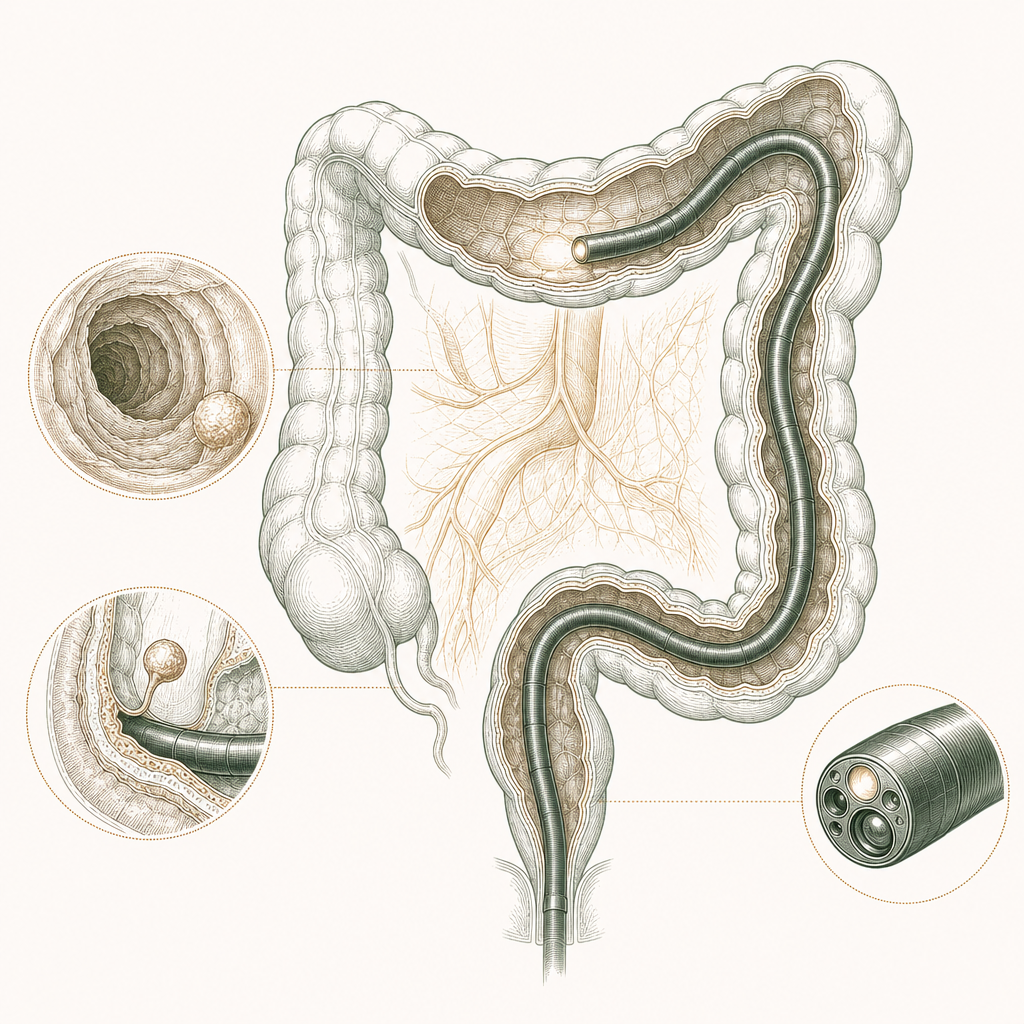
A clear path, from first test to a plan you understand.
For people at average risk with no symptoms, screening can start with a simple stool test. If it is normal, you carry on with regular checks at the recommended interval. If it shows hidden blood, the next step is a colonoscopy to find the cause.
A screening colonoscopy is the most thorough check. After a bowel-cleansing preparation the day before, it is done under light sedation, takes around twenty to thirty minutes, and any polyp found is removed during the same procedure. Almost everyone goes home the same day, with the findings explained plainly before they leave.
- Stool test as a simple first step for average-risk patients
- Screening colonoscopy under light sedation, home the same day
- Polyps removed during the same colonoscopy where suitable
- Findings and next steps explained clearly before you leave
A surgeon who built care around older patients.
For an elderly parent, the questions are different. Is the bowel preparation safe? Is the sedation safe? As the former Surgical Lead for Geriatric Surgery at Khoo Teck Puat Hospital, Dr Lee developed assessment and recovery pathways designed around older patients, and co-authored a 2024 review in the Journal of Gastrointestinal Surgery on how surgeon-led geriatric care drives good outcomes in older patients undergoing colorectal cancer surgery.
For families weighing up screening or surgery for a parent, that experience is the difference between a procedure and a recovery. More about Dr Lee's background and approach.

A clear result, and a clear next step.
A normal result
Most screening results are reassuring. If nothing concerning is found, Dr Lee tells you when your next check is due, and you can put the worry down until then.
A polyp removed
If a polyp is found and removed, it is sent for testing. Removing it is often the whole point of screening, it lowers your future risk, and Dr Lee sets out a sensible follow-up interval.
Something that needs treatment
If something more is found, it has almost always been caught early, when it is most treatable. Dr Lee explains exactly what it means and walks you through the plan from there.
Clear screening costs, with MediSave and insurance guidance.
Cost depends on whether you start with a stool test or go straight to a colonoscopy, whether a polyp is removed, and the hospital. As a public guide, the Ministry of Health publishes surgeon-fee benchmarks for colonoscopy. The figures below are the MOH surgeon-fee benchmark with GST. The anaesthetist (sedation) fee and the hospital or day-surgery facility fee are charged separately and vary by hospital. Your exact fee is explained clearly at consultation, before anything is scheduled.
| Type of screening | MOH surgeon fee benchmark (with GST) |
|---|---|
| Stool test (FIT) as a first stepLow-cost, often subsidised | Ask the team |
| Screening colonoscopySF702C / SF703C | SGD 1,308 to 1,962 |
| Colonoscopy with polyp removalSF704C | SGD 1,853 to 2,616 |
These are published fee benchmarks, before MediSave and insurance. Screening colonoscopy is typically MediSave claimable, and day-surgery procedures are usually covered under Integrated Shield Plans, so most insured patients pay much less out of pocket. National screening programmes also subsidise stool testing for eligible residents. The team works out your likely cost with you before anything is scheduled.
Surgeon fee benchmark only. The anaesthetist (sedation) fee (about SGD 600 to 870 with GST) and the hospital or day-surgery facility fee are charged separately and vary by hospital. Screening colonoscopy is done as a day procedure.
Use what you are entitled to
Screening colonoscopy is typically MediSave claimable, subject to the withdrawal limits set for the procedure. We help you apply it correctly.
Often covered by your plan
Screening colonoscopy and day-surgery procedures are usually covered under Integrated Shield Plans. We help you understand what your plan covers before anything is scheduled.
We handle the claim
The team assists with the forms and liaises with your insurer where possible, so you can focus on getting it done.
Fee benchmark figures are the Ministry of Health (Singapore) surgeon-fee benchmarks (procedures SF702C, SF703C, SF704C), with GST, and are a public guide, not a quotation.
The plans we work with.
Dr Daniel Lee practises with Colorectal Clinic Associates (CCA). The clinic works with the insurers below, and the team assists with claims and eligibility checks.






















Colorectal cancer screening in Singapore, answered plainly.
At what age should I start screening?
Do I need a colonoscopy, or is a stool test enough?
Does blood in my stool mean I have cancer?
How often do I need to be screened?
Will MediSave or my insurance cover it?
I am arranging this for an elderly parent. Is that different?
Screening and consultations across five private hospitals.
Related conditions and procedures.
A short message is enough to begin.
Whether the screening is for you or a family member, send a note with your name, number and what you are noticing or wondering about. Dr Lee's team will reply on WhatsApp and arrange a time and location that suits you.