Anal fissure treatment in Singapore, a clear path to recovery.
A sharp pain when you open your bowels, sometimes with bright red bleeding on the paper, is one of the most common colorectal problems people quietly put up with. An anal fissure is a small tear in the lining of the anus, and most settle with simple measures that soften the stool and let the skin heal. When one has been there a while and does not close on its own, a minor procedure is usually all that is needed.
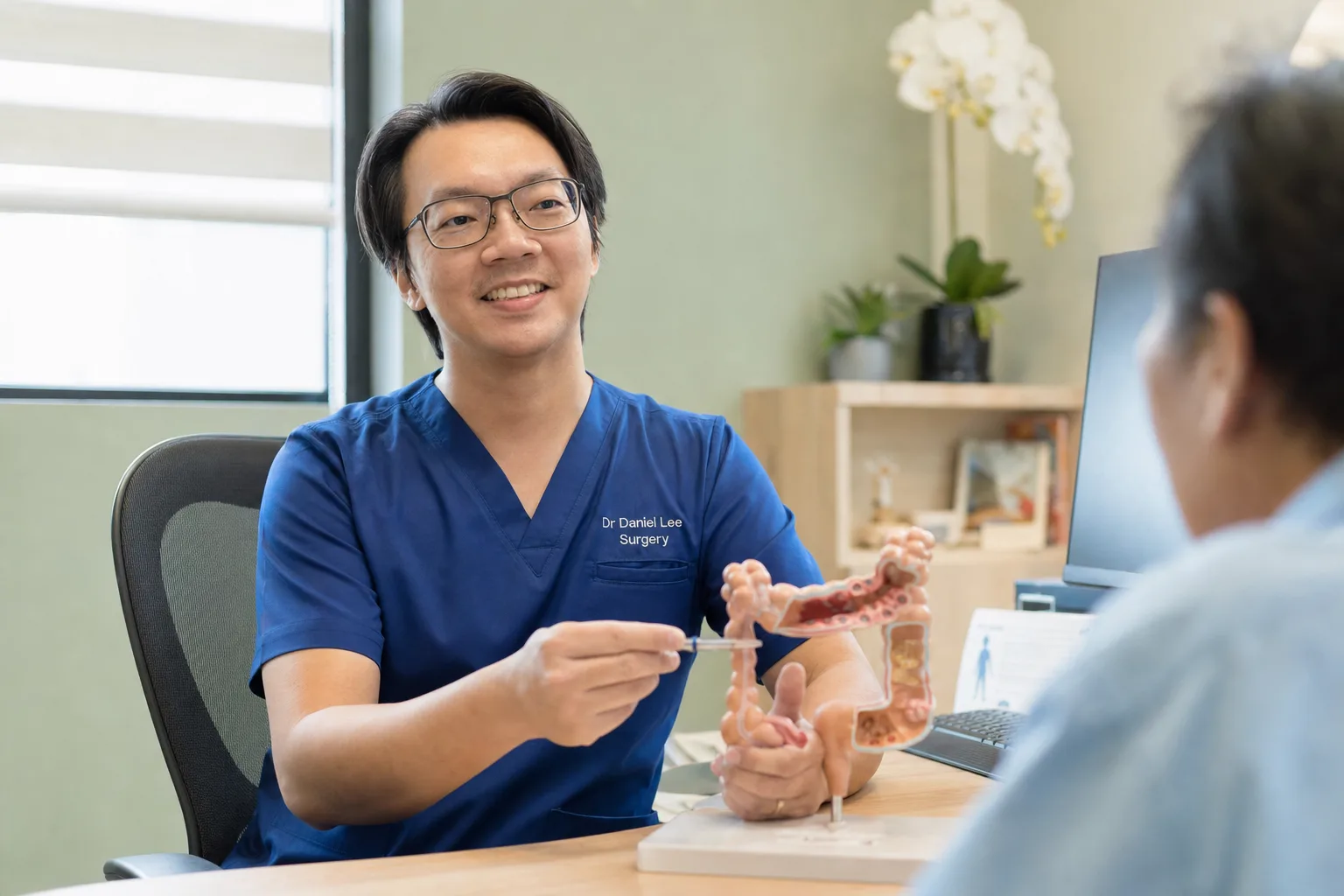
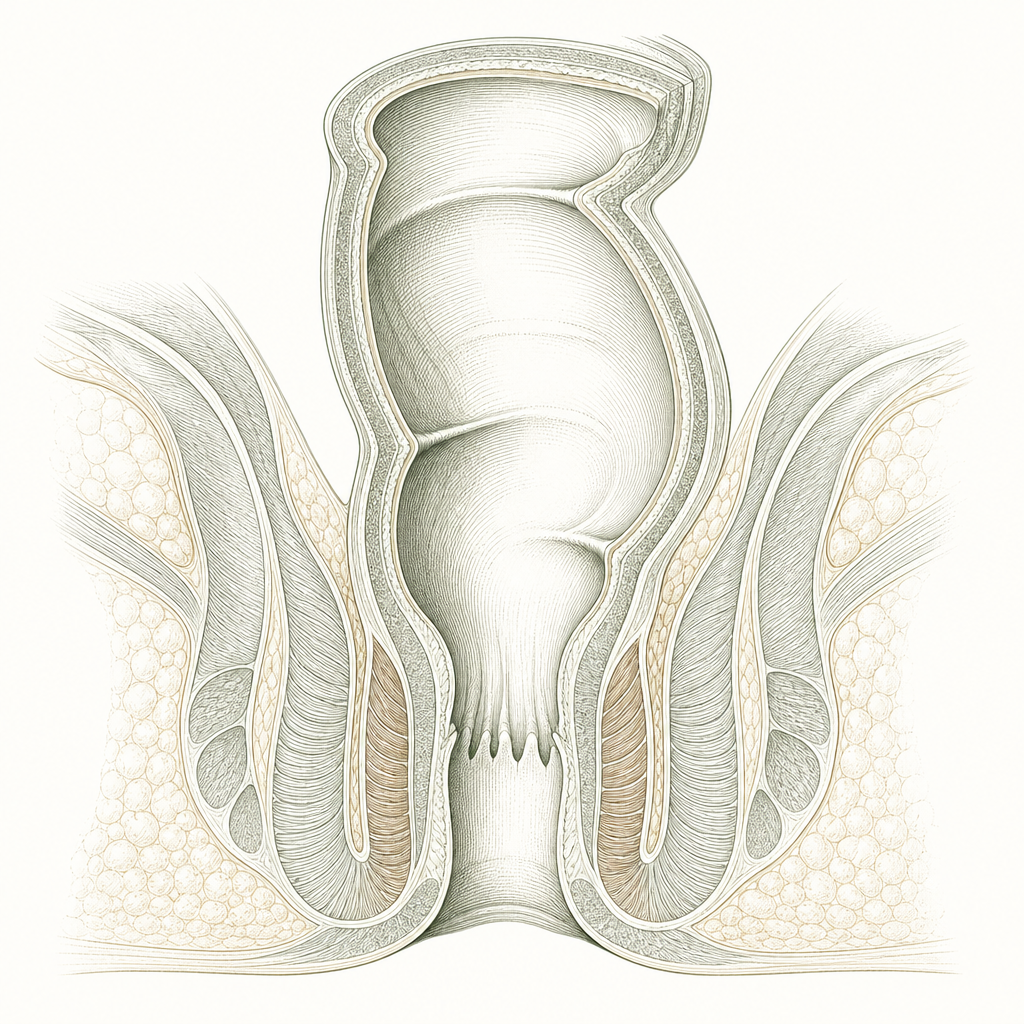
A small tear that heals well with the right care.
An anal fissure is a small tear in the lining of the anus. It is one of the most common colorectal conditions and can affect anyone at any age. The most frequent cause is passing a hard or dry stool that stretches and splits the skin. Because this area has a rich nerve supply, an anal fissure tends to cause more pain than you might expect from such a small injury. Most fissures heal with simple measures such as softening the stool with more fibre and fluids, warm baths, and creams that relax the muscle and improve blood flow to the area.
Dr Lee assesses and treats fissures as part of his colorectal and proctology practice. The vast majority of patients do not need an operation. When a fissure has persisted for more than six to eight weeks and become chronic, a minor procedure such as a botulinum toxin injection is usually all that is needed to allow it to heal.
Acute fissure
A fissure that has been present for fewer than six weeks. Most acute fissures heal with dietary changes and soothing creams, without any procedure.
Chronic fissure
A fissure that has not healed after about six to eight weeks. A chronic fissure may develop a small skin tag at its edge and often benefits from a minor procedure to help it close.
Constipation and straining
Passing hard or dry stools is the most common trigger. Increasing fibre and fluid intake to soften the stool often breaks the cycle and lets the fissure settle.
Muscle spasm
Pain from the fissure causes the internal sphincter muscle to tighten, which reduces blood flow and slows healing. Relaxing the muscle is the key to recovery.
Symptoms that point to a fissure, and when they should be seen.
An anal fissure is easy to mistake for haemorrhoids or other conditions. The pattern of symptoms is usually quite distinct. Identifying a fissure early helps you start the right treatment sooner, so the problem does not become chronic.
- Sharp pain during a bowel movement, sometimes lasting minutes or hours afterwards
- Bright red blood on the toilet paper or in the pan after opening the bowels
- A visible small tear, crack, or skin tag at the edge of the anus
- A burning or stinging sensation that comes on after passing stool
- Discomfort or tightness around the anus between bowel movements
Some bleeding needs to be assessed rather than assumed to be a fissure.
Bright red blood on the toilet paper after a hard stool is the most common sign of a fissure. However, heavy bleeding, or bleeding that comes alongside a change in bowel habit, unexplained weight loss, or pain that is getting worse rather than better, should be seen promptly. These signs can sometimes point to something other than a fissure, and it is far better to get a clear answer than to wait. If you are unsure, send a message and the team will advise.
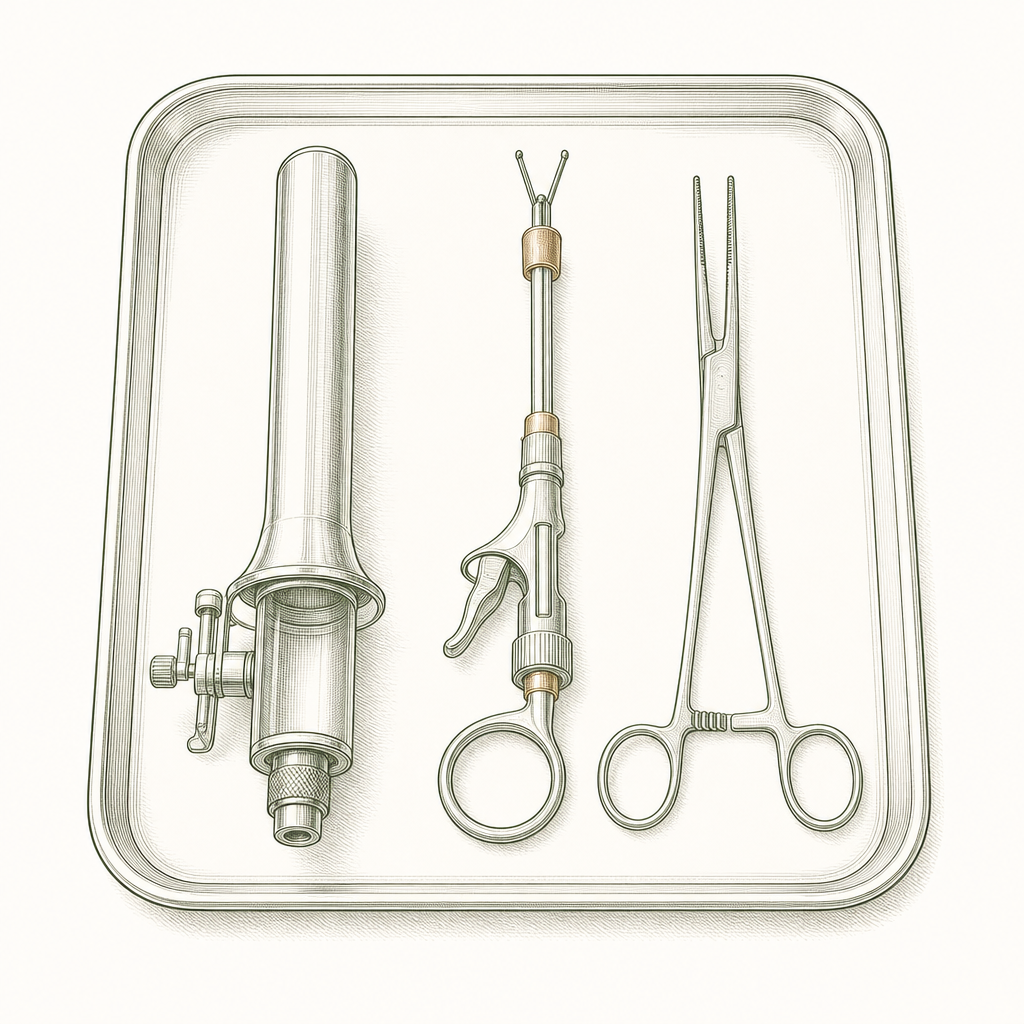
Conservative care first, a minor procedure only when the fissure is chronic.
The first step is always to give the fissure the best chance to heal on its own. This means softening the stool with more fibre and fluids, taking warm baths to ease discomfort, and applying a cream or ointment that relaxes the internal sphincter muscle and improves blood flow to the area. Most acute fissures heal within a few weeks with this approach, and no procedure is needed.
When a fissure has not healed after about six to eight weeks, Dr Lee may recommend a minor procedure. The most common option is a botulinum toxin injection, which temporarily relaxes the sphincter muscle and gives the fissure time to close. For a small number of patients where other treatments have not worked, a short sphincterotomy procedure gives a reliable result. Dr Lee explains the options clearly so you can decide together what suits you.
- Soften the stool with more fibre and fluids, which is the single most important first step
- Warm baths and soothing creams or ointments that relax the muscle and aid healing
- Botulinum toxin injection to relax the sphincter for a chronic fissure that has not responded to creams
- A small sphincterotomy procedure for cases where conservative treatment and injections have not worked
A surgeon who built care around older patients.
For an elderly parent, the questions are different. Is the anaesthetic safe? Will recovery be steady? As the former Surgical Lead for Geriatric Surgery at Khoo Teck Puat Hospital, Dr Lee developed assessment and recovery pathways designed around older patients, and co-authored a 2024 review in the Journal of Gastrointestinal Surgery on how surgeon-led geriatric care drives good outcomes in older patients undergoing abdominal surgery.
For families weighing up an operation for a parent, that experience is the difference between a procedure and a recovery. More about Dr Lee's background and approach.

A steady return to comfort, with clear next steps.
Symptoms ease with treatment
Most people notice a clear improvement within a few days of starting conservative treatment. Pain after bowel movements becomes shorter and less intense, and the bleeding usually settles within one to two weeks.
Back to normal activity
There is no set recovery period for fissure treatment. You can continue daily activity throughout. The main goal is to keep the stool soft so each bowel movement does not aggravate the area while it heals.
After a minor procedure
After a botulinum toxin injection or a sphincterotomy, most people go home the same day. Any mild discomfort settles quickly. Dr Lee provides clear written guidance and a number to reach the team with any question.
Clear costs for anal fissure treatment, with MediSave and insurance guidance.
Your exact fee is explained clearly at consultation, before anything is scheduled.
You can check these figures against the published MOH fee benchmark page.
Anaesthetist and facility fees are charged separately and vary by hospital. Where a minor procedure is needed, it is typically a day-surgery procedure.
Use what you are entitled to
A minor procedure for a chronic anal fissure is typically MediSave claimable, subject to the withdrawal limits set for the procedure. We help you apply it correctly.
Often covered by your plan
Day-surgery and short-stay procedures are usually covered under Integrated Shield Plans. We help you understand what your plan covers before anything is scheduled.
We handle the claim
The team assists with the forms and liaises with your insurer where possible, so you can focus on getting better.
The plans we work with.
Dr Daniel Lee practises with Colorectal Clinic Associates (CCA). The clinic works with the insurers below, and the team assists with claims and eligibility checks.






















Anal fissure treatment in Singapore, answered plainly.
What causes an anal fissure?
Will my fissure heal on its own?
Is a botulinum toxin injection for a fissure painful?
How long does recovery take?
Will MediSave or my insurance cover the treatment?
I am arranging this for an elderly parent. Is that different?
Anal fissure consultations across five private hospitals.
Related conditions Dr Lee treats.
A short message is enough to begin.
Whether you have noticed pain or bleeding when passing stool, or a fissure that keeps coming back, send a note with your name, number and what you are experiencing. Dr Lee's team will reply on WhatsApp and arrange a time and location that suits you.