Hernia
What hernia mesh is made of, where it sits, and what can go wrong
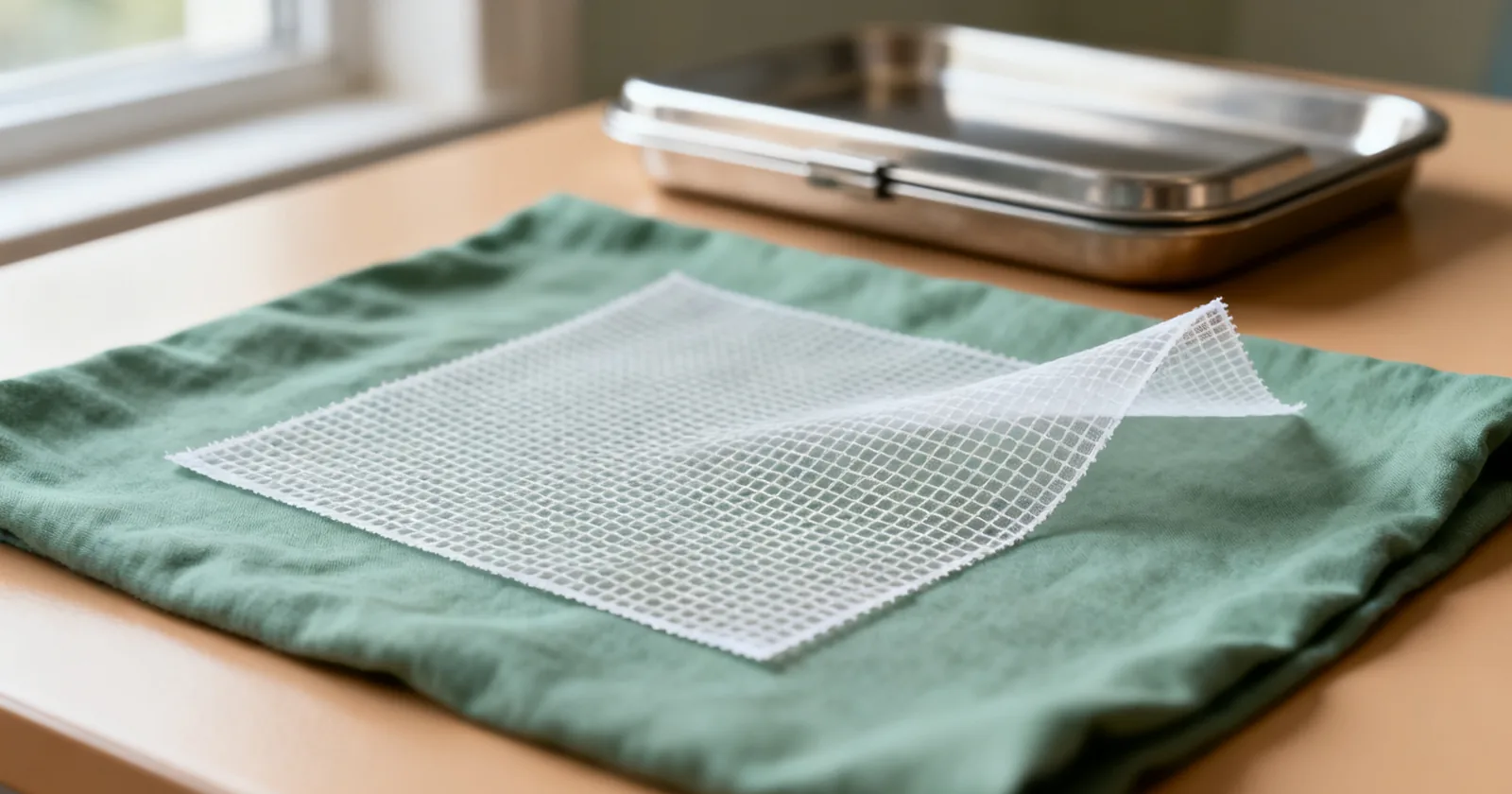
You've been told your hernia repair will use mesh, and now you want to know what will be left inside your body. Maybe a relative has warned you about leaving "plastic" in there for good. That's a fair worry, and it deserves a straight answer.
Here's the short answer. Hernia mesh is a thin, flexible sheet, usually made of a plastic such as polypropylene or polyester, that's laid over the weak spot once the hernia has been eased back into place. Your body grows scar tissue around its fibres, and that's what holds it there. Most planned hernia repairs now use mesh, and international guidelines recommend it as the first choice. Like any operation, a mesh repair carries risks. Pain that still gets in the way of daily life 3 months or more after surgery follows about 10 to 12% of groin hernia repairs of any kind, and mesh adds a few risks of its own. This page sets them out, with the figures, so you can talk them through with your surgeon.
If you're still weighing up the operation itself, you can read how a keyhole hernia repair is planned and done.
Key takeaways
- Hernia mesh is a medical device that reinforces the weak spot in the muscle wall, and most planned hernia repairs now use one.
- The most commonly used meshes are made of plastic fibres such as polypropylene or polyester and stay in the body for good. Others are absorbed by the body over time, or made from processed pig or cow tissue.
- Your body treats mesh as foreign material and wraps it in scar tissue, which holds it in place. The international guideline found no strong evidence of allergic reactions to mesh.
- Where the mesh sits depends on the operation: in front of the deeper muscle (onlay) in the usual open groin repair, behind the muscle (sublay) in a keyhole groin repair, and inside the belly's lining in one keyhole method for belly-wall hernias. In theory, a mesh behind the muscle holds the repair better.
- The complications to know about are long-lasting pain, which can partly come from how the mesh is held in place, infection, fluid under the wound, the bowel sticking to the mesh and, rarely, mesh wearing into the bowel.
What hernia mesh is made of, and how your body reacts to it
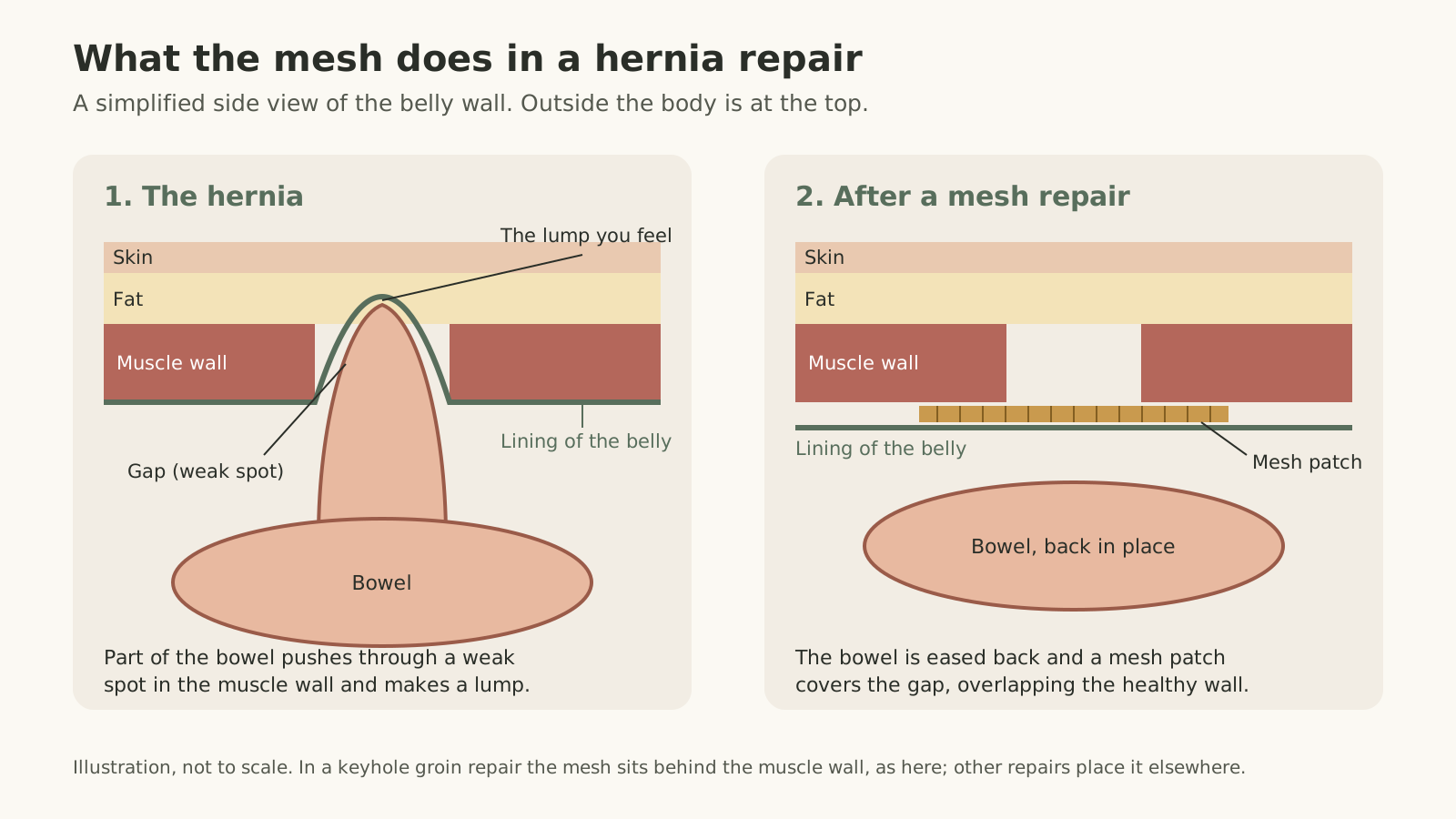
A hernia happens when part of the bowel, or the fatty tissue around it, pushes through a weak spot in the muscle wall. It usually shows up as a lump in the groin, at the belly button or near an old scar, and it doesn't repair itself. Surgery fixes it in two steps: the surgeon eases what has pushed through back into place, then closes or covers the weak spot so it holds. Mesh does the covering. The US Food and Drug Administration describes surgical mesh as a medical device that gives additional support to weakened or damaged tissue.
The FDA sorts hernia mesh by what it's made of. Synthetic mesh is made of fine fibres, knitted into a net or made as a flat sheet. It can be non-absorbable, which stays in the body for good, or absorbable, which the body takes up so that it loses strength over time, and some meshes combine the two. The international groin hernia guideline names polypropylene and polyester, both plastics, as the most commonly used materials for open-weave meshes. Other meshes are made from animal tissue, mostly from pigs or cows, which is processed and disinfected so it can be implanted.
Your body reacts to mesh as foreign material. The same guideline describes how inflammation around the mesh fibres lays down scar tissue that wraps them in. That reaction is expected, and it's what holds the mesh in place against the muscle wall.
Why most planned hernia repairs now use mesh
A repair with stitches alone pulls the edges of the weak spot together under tension. A mesh patch covers the gap without pulling the edges together, and it overlaps the healthy tissue around it. That is why surgeons call it a tension-free repair.
That's why the international guidelines for groin hernia management, published by the HerniaSurge Group in 2018, recommend mesh repair as the first choice, by open or keyhole surgery. The European and Americas Hernia Societies made mesh their main recommendation for belly-button hernias in 2020, and the European Hernia Society's 2023 guideline for hernias at an old midline scar recommends a mesh repair too.
Practice matches the guidelines. In a 2025 study of Sweden's national hernia register, only 0.7% of 89,212 planned groin hernia repairs, done between 2012 and 2018, were stitched without mesh.
The trials behind those guidelines found that mesh lowers the chance of the hernia coming back. A 2018 Cochrane review found that it roughly halved the risk for groin hernias compared with stitches alone. For scar hernias, across the five trials the 2023 guideline pooled, the hernia came back in about 12% of people repaired with mesh, against about 30% of those repaired with stitches. These are averages across trials, not a prediction for any one person.
Emergency repairs follow the same rule, with one exception. When a trapped hernia is operated on urgently and the bowel inside is healthy, an international emergency surgery guideline still recommends a mesh repair. When the trapped bowel has been strangulated, meaning its blood supply has been cut off, or has already been damaged by the lack of blood, the risk of infection is higher, and the weak spot is often closed without mesh. The surgeon decides during the operation.
Where hernia mesh sits in open and keyhole repair
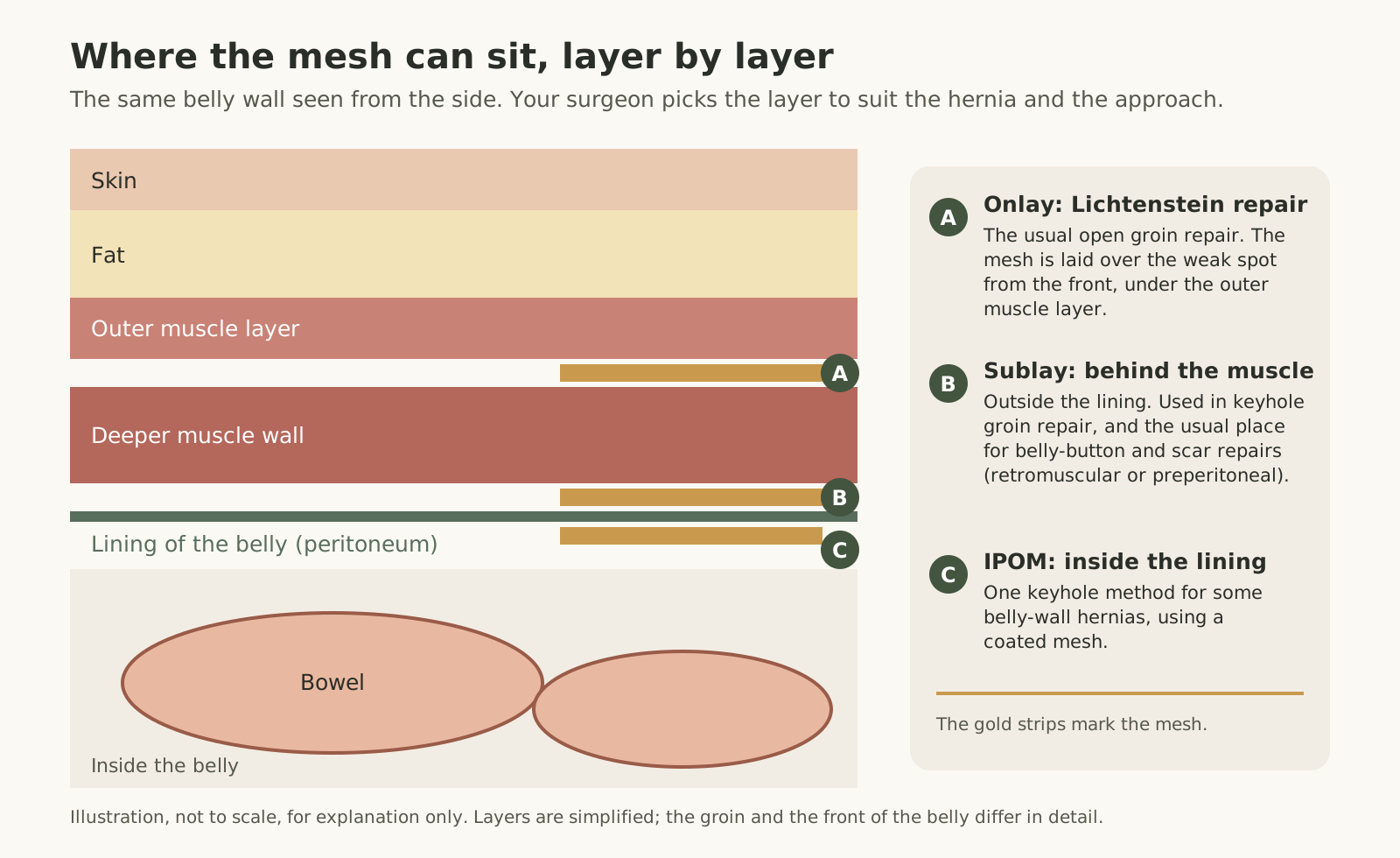
The belly wall is built in layers: skin, fat, muscle, and a thin inner lining around the bowel. Where the mesh goes depends on the hernia, and on whether the operation is open, through one cut, or keyhole (laparoscopic), through a few small cuts instead of one long one.
In the usual open groin repair (the Lichtenstein repair), the mesh is laid over the weak spot from the front, under the outer layer of muscle. Surgeons call this an onlay mesh. In a keyhole groin repair, it goes behind the muscle wall, outside the lining, which is called a sublay mesh.
The layer matters. In theory, a mesh behind the muscle holds the repair better, and the international groin hernia guideline says the evidence suggests that position is preferred, because the mesh sits in a more natural place there and away from the nerves in the groin.
For most belly-button hernias, the European and Americas guideline suggests a small cut with a flat mesh placed just outside the lining, and for a hernia at an old midline scar, the 2023 European guideline recommends placing the mesh behind the muscle.
One keyhole method for some belly-wall hernias, called IPOM, places the mesh inside the lining. It uses a mesh designed for that position, with a coating on the side that faces the bowel.
| Operation | Where the mesh sits | What surgeons call it |
|---|---|---|
| Open groin repair (Lichtenstein) | In front of the deeper muscle wall, under the outer muscle layer | Onlay |
| Keyhole groin repair (TEP or TAPP) | Behind the muscle wall, outside the lining | Sublay |
| Belly-button hernia, through a small cut | Just outside the lining | Sublay (preperitoneal) |
| Hernia at an old midline scar | Behind the muscle | Sublay (retromuscular) |
| One keyhole method for some belly-wall hernias (IPOM) | Inside the lining, with a coated mesh | Intraperitoneal |
How hernia mesh is held in place, and why it matters for pain
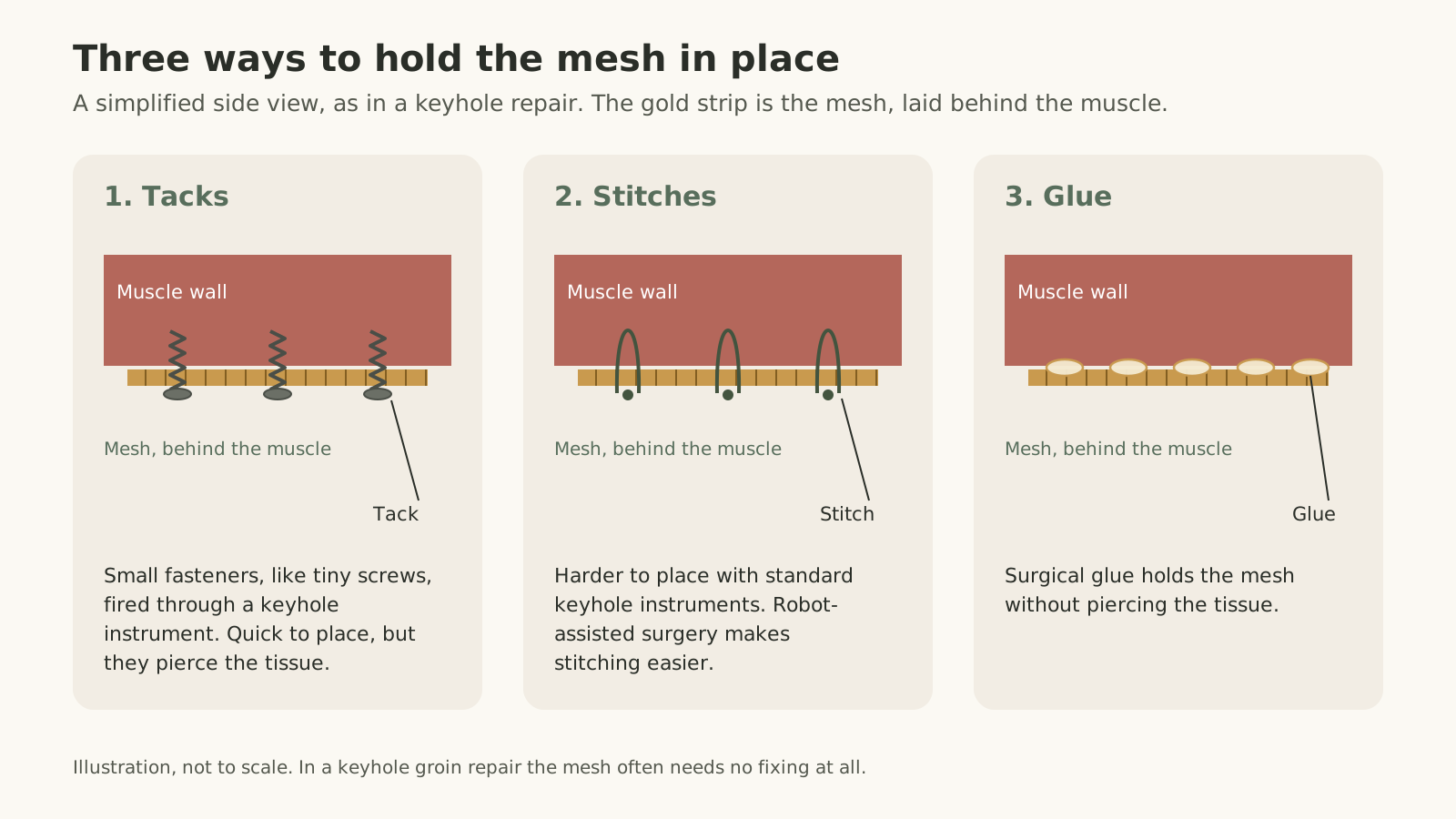
Once the mesh is in position, the surgeon may fix it so it stays flat while your body grows into it. There's more than one way to do this. The international groin hernia guideline found no agreement on which method is better, and notes that the choice rests on the surgeon's preference.
In keyhole surgery, a common choice is tacks: small fasteners, a bit like tiny screws or thumbtacks, fired into the tissue through a keyhole instrument. They're quick and convenient to place. The trade-off is that they pierce the tissue. The guideline lists long-lasting pain among the problems that fixing the mesh can cause, and warns that a tack or stitch driven into the covering of the pubic bone is likely to cause intense, lasting pain.
Stitches are the other main option. They're harder to place with standard keyhole instruments, and robot-assisted keyhole surgery, where the surgeon works jointed instruments from a console, makes stitching easier. Some surgeons use surgical glue instead, which the guideline suggests considering to lower the risk of pain soon after surgery. And in a keyhole groin repair, the mesh may not need fixing at all: the guideline recommends leaving it unfixed in most cases, and fixing it for large hernias on the inner side of the groin.
If pain worries you, it's a fair question for your consultation: how will my mesh be held in place, and why?
What can go wrong with hernia mesh, and how often
Every hernia operation carries risk, with or without mesh. The question worth asking is which risks mesh adds, and how often each one happens. The table sets out what the main sources found.
| What can happen | How often, where the studies give a figure |
|---|---|
| Long-lasting pain (3 months or more) | About 10 to 12% after groin hernia repair of any kind, easing over time; 0.5 to 6% have pain that disrupts normal daily activities or work |
| Fluid collecting under the wound (seroma) | More common with mesh: 3% with mesh against under 1% with stitches in a 2018 belly-button hernia trial |
| Infection | After groin repair, possibly slightly more common with mesh, though the 2018 Cochrane review could not rule out no difference. In two scar hernia trials, 8.5% with mesh against 7.9% with stitches, a difference the 2023 guideline did not find significant |
| The bowel sticking to the mesh (adhesion) | The FDA lists adhesions and bowel blockage among the most common problems after any hernia repair; no reliable rate in these sources |
| Mesh moving, or wearing into the bowel | Rare. The groin guideline calls erosion of a flat mesh uncommon, and a 2019 review found mesh moving reported mostly as single cases |
| Mesh shrinking | Listed by the FDA as a possible problem with mesh; no reliable rate in these sources |
| The hernia coming back | Still possible with mesh, at a lower rate than with stitches alone; see the figures above |
Pain is the risk that worries people most, so it's worth being precise. The 10 to 12% figure is for groin hernia repair in general, not for mesh alone, and the international guideline states that using mesh lowers the risk of long-lasting pain rather than raising it. It lists what raises the risk: younger age, being female, a lot of pain before surgery, strong pain early after it, a hernia that has come back, and open rather than keyhole repair. It adds that the way the mesh is fixed, or not fixed, may help lower it.
Two complications involve the bowel. Scar tissue can make the bowel stick to the mesh. Rarely, a mesh can move from where it was placed, or wear into a nearby organ such as the bowel. A 2019 review of mesh moving after hernia repair found it reported mostly as single cases, 77 of the 84 papers it included, and its authors called for a standard way of recording it.
Questions to ask your surgeon before you agree to mesh
A good consultation leaves room for these. If you're deciding with or for a parent, bring the list and write the answers down; it's easy to forget details on the day.

| Ask | Why it helps |
|---|---|
| Will you use mesh for my hernia, and if not, why not? | Mesh is the guideline default for planned repairs, so either answer should come with a reason. |
| Which kind of mesh: permanent, absorbable or animal-derived? | The types behave differently in the body over time. |
| Keyhole or open, and in which layer will the mesh sit? | In front of the muscle (onlay) or behind it (sublay). In theory, behind the muscle holds the repair better. |
| How will the mesh be held in place: tacks, stitches, glue or not at all? | The way it's fixed can affect pain after surgery. |
| What is my own risk of long-lasting pain? | Age, sex, pain before surgery and a hernia that has come back all change it. |
| Can I go home the same day? | The guideline recommends day surgery for most groin repairs, provided aftercare is arranged. |
| Will the type of mesh be written in my records? | It helps any surgeon who treats you in the future. |
| I take a blood thinner. When should I pause it, and when can I restart it? | Some are paused a few days before surgery. Never stop one on your own: your doctor weighs the risk of bleeding against the risk of a clot. |
Life after the repair, and the signs that should not wait
The HerniaSurge guideline recommends going back to normal activities, without set restrictions, as soon as you feel comfortable. For what to expect with work, lifting and exercise, see the recovery section of our hernia surgery page.

Common questions about hernia mesh
Can my body reject hernia mesh?
Not in the way a transplanted organ is rejected. The body does react to mesh as foreign material, which is how it becomes wrapped in scar tissue. The international guideline found no strong evidence of allergic-type reactions, and says that when a mesh seems to be "rejected", infection should be suspected.
Does hernia mesh stay in the body for good?
It depends on the type. Non-absorbable mesh is made to stay in the body for good, while absorbable mesh is taken up by the body and loses strength over time. Ask your surgeon which kind is planned for you.
Can a hernia come back after a mesh repair?
Yes. Mesh lowers the chance rather than removing it. In a 2018 Lancet trial of 300 adults with belly-button hernias of 1 to 4 cm, the hernia came back in 4% of people repaired with mesh over up to 30 months, against 12% of those repaired with stitches.
Does every hernia repair need mesh?
Most planned repairs use it, because guidelines recommend it as the first choice. A repair without mesh is kept for particular situations, such as an emergency in which the trapped bowel has been strangulated. If you would rather not have mesh, say so early, and ask what that means for your chance of the hernia coming back.
Can hernia mesh be taken out if there is a problem?
Yes, in selected cases. For severe long-term pain, the guideline suggests medicines and nerve treatments first, followed, in selected cases, by nerve surgery and removing the mesh if those don't help.
My parent is in their 70s. Is a mesh repair still an option?
Age is one factor in the decision; general health and the type of hernia matter too. Both keyhole and open mesh repairs have been studied in older adults. A 2022 review by a National University Health System team pooled five studies of older adults and found that keyhole repair was linked to a shorter hospital stay, fewer wound infections and less long-lasting pain than open repair, though the evidence was limited. Bring your parent's medicine list, especially any blood thinners, and health history to the consultation.
Can I use MediSave for a hernia repair with mesh?
Hernia repairs are listed in the Ministry of Health's Table of Surgical Procedures, which places each operation in a class that sets how much MediSave can be used for each operation. What applies to you depends on the operation planned, and the clinic's fees page explains how the team helps with MediSave and insurance claims.
The bottom line on hernia mesh
Hernia mesh is a soft, net-like patch, usually made of plastic, that your body wraps in scar tissue. It's the standard choice for planned hernia repairs because it lowers the chance of the hernia coming back. What's worth understanding before your operation is what your mesh is made of, which layer it will sit in and how it will be held in place, because those choices shape how well the repair holds and the risks: long-lasting pain, infection, fluid under the wound and the bowel sticking to the mesh.
Take the questions above to your consultation. To talk through your own hernia and hernia repair with Dr Daniel Lee, you can send the clinic a WhatsApp message.
Written by the clinic's editorial team.
Reviewed by Dr Daniel Lee, general surgeon with a clinical interest in colorectal surgery. Read about Dr Daniel Lee's training and hospital appointments.
This article is general information and not a diagnosis. Your surgeon will advise on your own hernia.